
This post may contain affiliate links. Please read our disclosure policy.

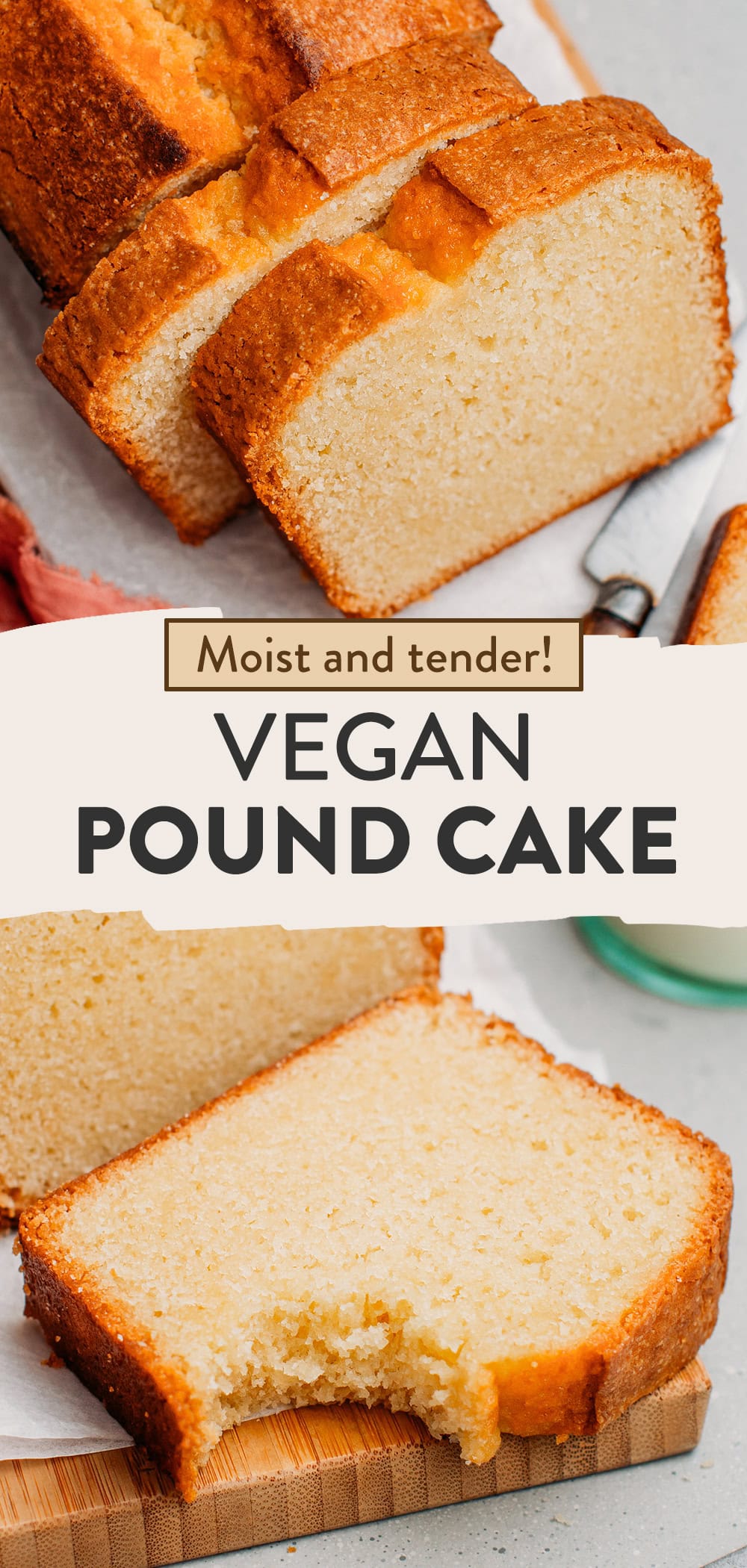
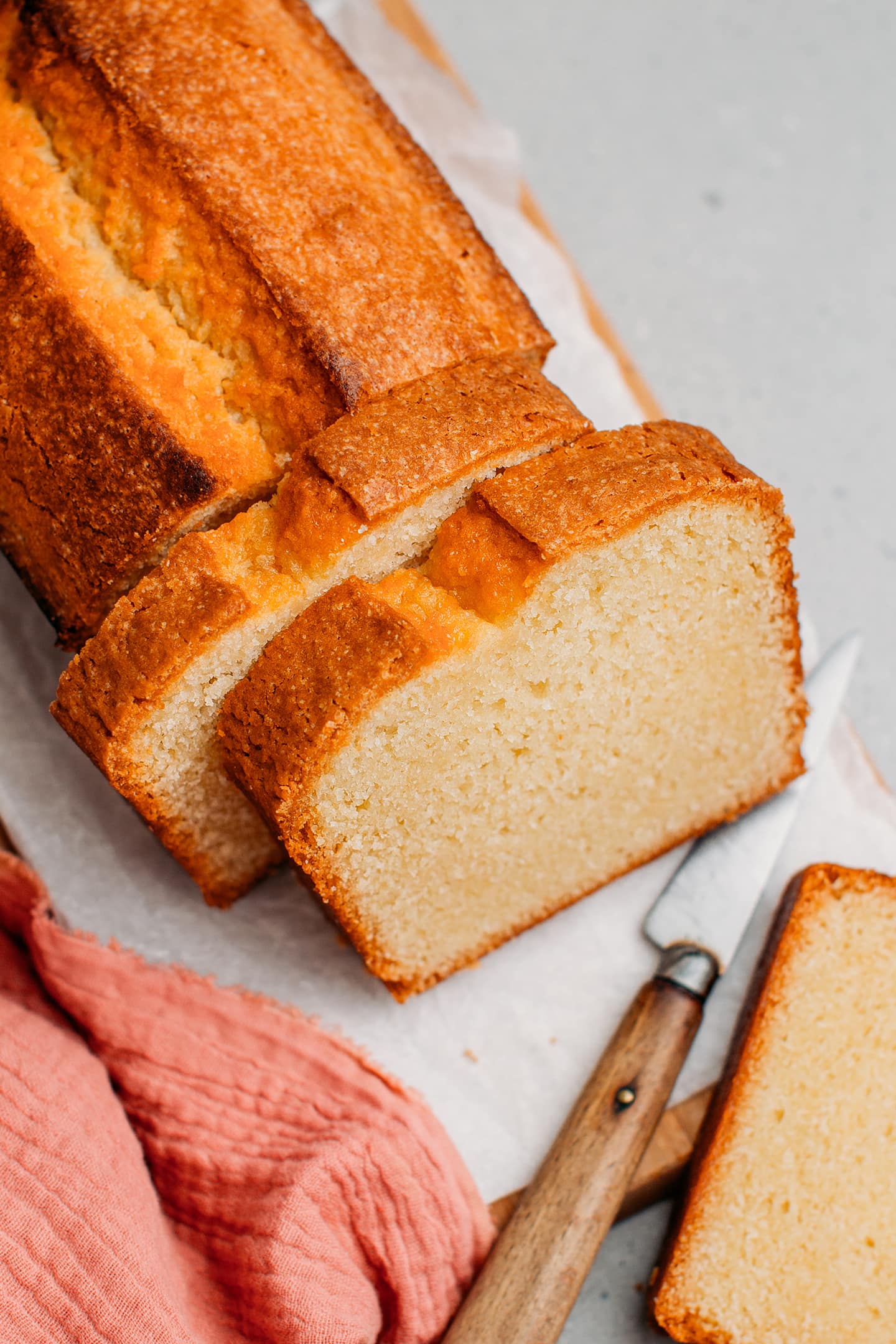
Introducing the best vegan pound cake! It is so rich and moist that you will never believe this pound cake is entirely eggless and plant-based. Complemented by a hint of vanilla, this classic dessert has a dense yet delicate crumb that will leave you asking for an extra slice!

Updated February 2026: I’ve improved the crumb texture, retested with tofu and yogurt, and added new moisture tests so you can successfully bake the perfect vegan pound cake!
Ah, pound cake, or “quatre-quarts” as we call it in French. It’s probably the sweet that brings back the most nostalgic memories from my childhood. While the store-bought ones I had before tasted pretty good, I can assure you that my recipe tastes MUCH better!
To develop this recipe, I did a ton of research to understand what makes pound cakes so special. I started by calculating the percentages of fat, sugar, and carbs in traditional pound cakes, then checked the nutritional information on supermarket packaging. My research showed that most pound cakes in France contain, on average, 29% sugar, 48% carbs, and 24% fat. With that in mind, I started experimenting with different ingredients to create a vegan pound cake that tastes as good as the traditional one, minus the eggs!
⭐️ Why This Recipe Works
- Dense and buttery cumb. Guests who tried this pound cake were SHOCKED it was vegan! It’s rich, buttery , and literally melts in your mouth. And the texture? Just like the traditional: perfectly dense yet moist and tender.
- Stays moist for 4+ days. Forget about cakes that become dry the next day. Thanks to the combination of vegan yogurt and oil, my pound cake stays moist for up to 4 days! This means you can enjoy it throughout the week.
- Tested with yogurt + silken tofu. I’ve extensively tested this recipe with different ingredients and ratios, so you have different options based on what’s available to you.
- 9 simple ingredients. You will need only 9 staples, no hard-to-find ingredients here!
- Ready in one hour. 20 minutes prep time, and the rest is baking!
🔬How I Perfected My Vegan Pound Cake
I’ve tested this recipe 14+ times to replicate the dense, buttery texture of traditional pound cake without eggs. It was not an easy task, but I’m so happy with the results! Here’s what I’ve experimented with:
- Yogurt vs. silken tofu for structure.
- 50% vs. 75% sugar for a slightly less sweet cake.
- Butter-to-oil ratio to improve moisture retention.
You can read about my experiments in depth below.
🥛 Yogurt vs. Silken Tofu
Many of you have asked me if they can replace the yogurt in this recipe, as it’s not always easy to find unsweetened vegan yogurt. The answer is yes! You can replace the yogurt with silken tofu. I tested this recipe with yogurt and silken tofu and compared both. Here are the results:
- Yogurt version: I used regular, unsweetened soy milk yogurt made with only soy milk and cultures, and baked the cake as noted in the recipe.
- Silken tofu version: To replace the yogurt, I use an equal weight of silken tofu. Since silken tofu is less liquid than yogurt, it has difficulty dissolving in the batter. To prevent that, I blended it into a cream before using it. Baking time was identical to the yogurt version.
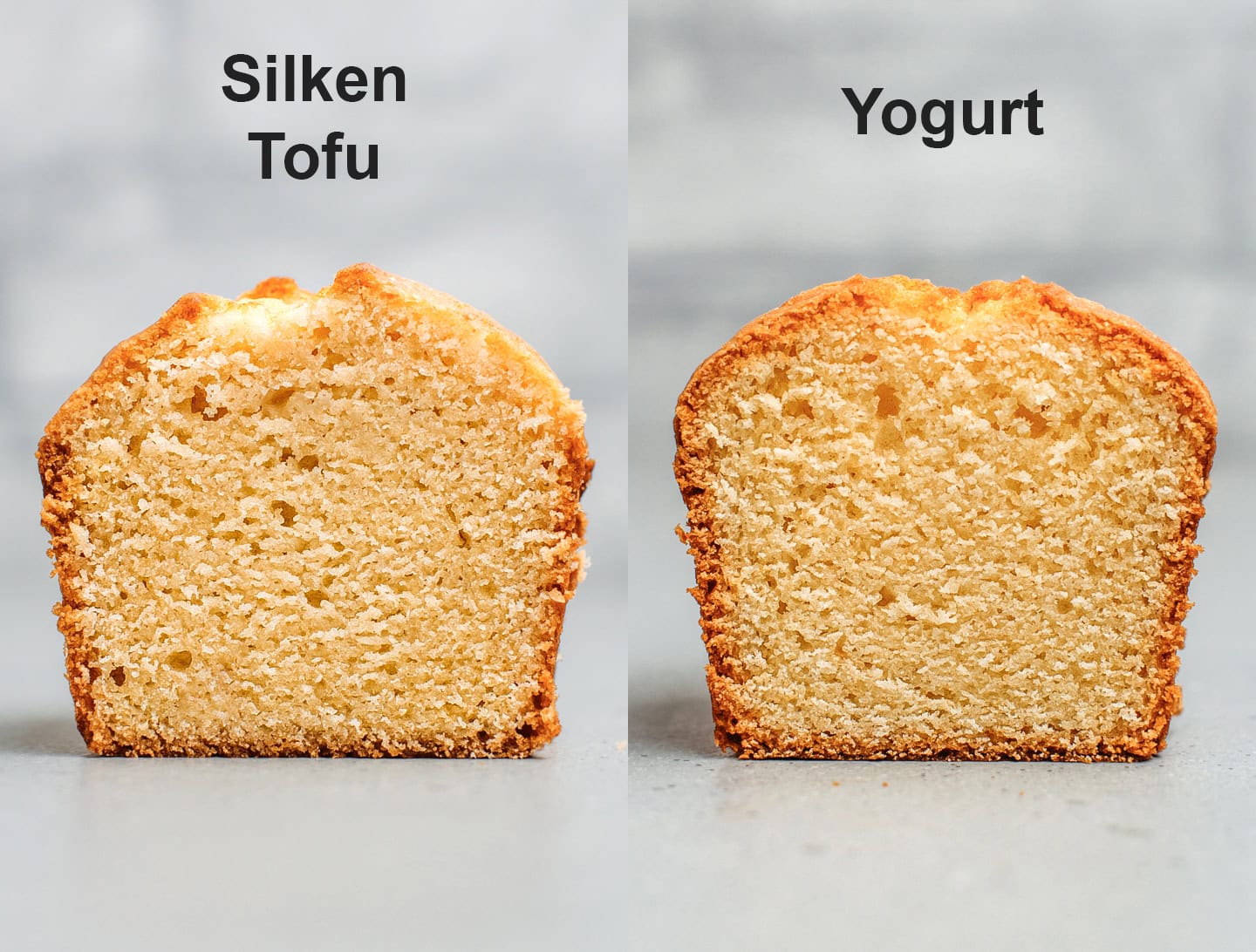
Conclusion: Whether I used yogurt or silken tofu, there was no significant difference in texture or flavor. The slightly different shape and texture you see in the photos above may simply be due to how I cut it and the lighting. Taste-wise, I found it tasted exactly the same.
🧁 Lowering the Sugar
If you are wondering whether you can reduce the sugar content of this pound cake recipe, I have you covered! I conducted a few tests by reducing sugar by 25% and 50%. Here are the results:
- 50% sugar: The lower amount of sugar made the batter much thicker, and I had to add an extra 3 tablespoons of milk. This pound cake didn’t rise as well as the others and was also a bit drier. Taste-wise, it was good, but we thought it needed a bit more sugar. I think this version would be great served with a sweet spread such as vegan Nutella or jam.
- 75% sugar: This version had a texture and shape almost as good as the 100% sugar one. I didn’t have to add any extra liquid.
- 100% sugar: Obviously, this pound cake had the best shape of all and a sweetness comparable to traditional pound cakes. It was also moister than the two other versions.
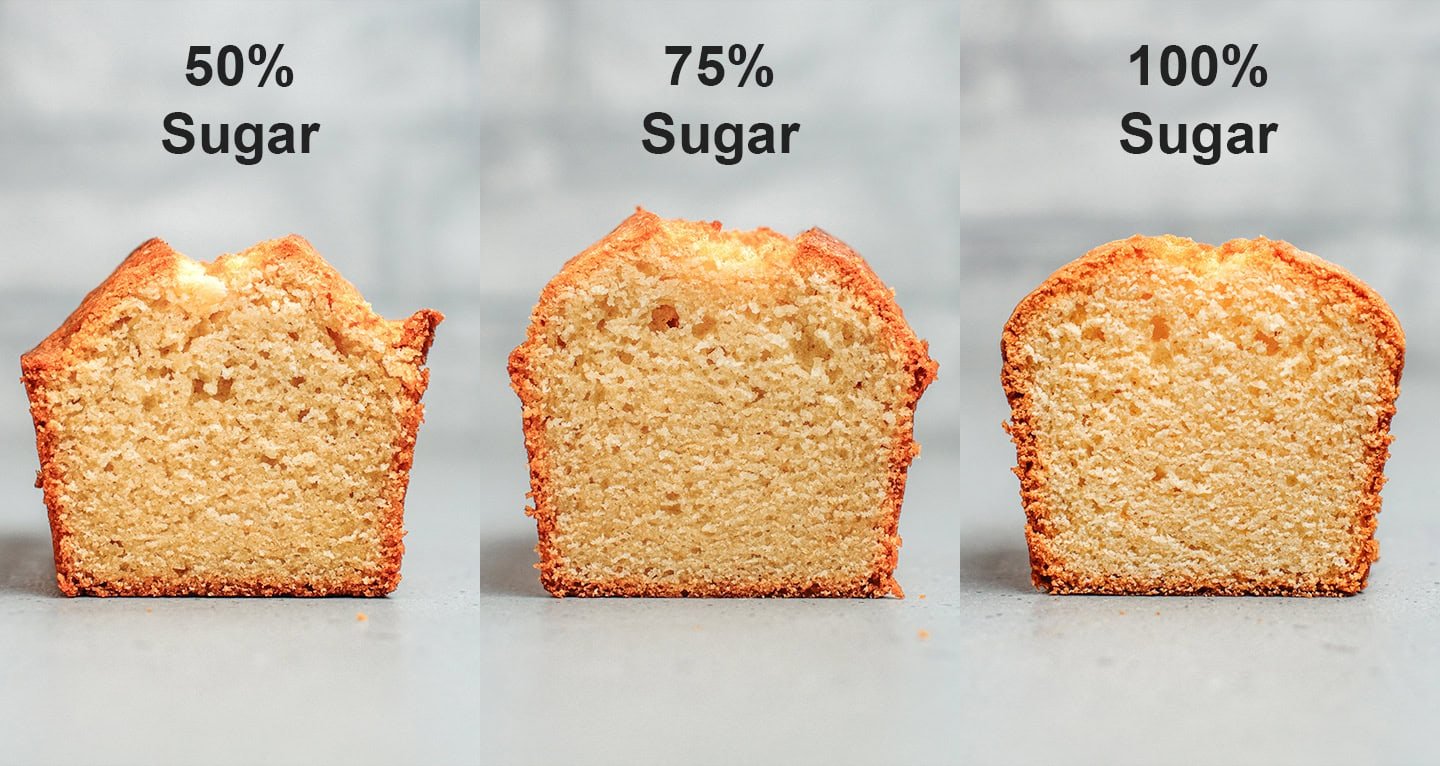
Conclusion: Each version tasted good, but the one containing only 50% sugar was significantly drier and had the worst shape. The 75% sugar version was probably my preferred option, but note that I do not have a particularly sweet tooth.
🧑🏼🍳 Butter and oil
I’ve also tested the recipe by omitting the oil entirely while keeping the butter. It resulted in a cake that was slightly drier. If you want your cake to stay moist and tender for days, I do not recommend it. On the other hand, if you want to reduce calories, feel free to remove it. Personally, I believe that pound cake is a treat and not supposed to be a healthy food anyway, so a few extra tablespoons of oil are not going to change much.
Note: To prevent waste, I tested all of these with half of the batter and baked them in a 5.75×3-inch loaf pan. You may notice the texture doesn’t look as thin as in the other photos. That’s simply because the cake is smaller, hence the texture looks coarser.
📘 What is a Pound Cake
A pound cake, also called “quatre-quarts” in French, is a sweet cake traditionally made with equal parts: flour, sugar, butter, and eggs. While its exact origin is unclear, it is believed that pound cake appeared in Northern Europe in the early 18th century.
Later, additional add-ins, such as vanilla extract, dried fruit, or chocolate chips, were added.
🧈 Magic Behind the Ingredients
Unlike traditional pound cake, this recipe calls for more than four ingredients. However, it still uses easy-to-find and budget-friendly ingredients. Here is what you will need:
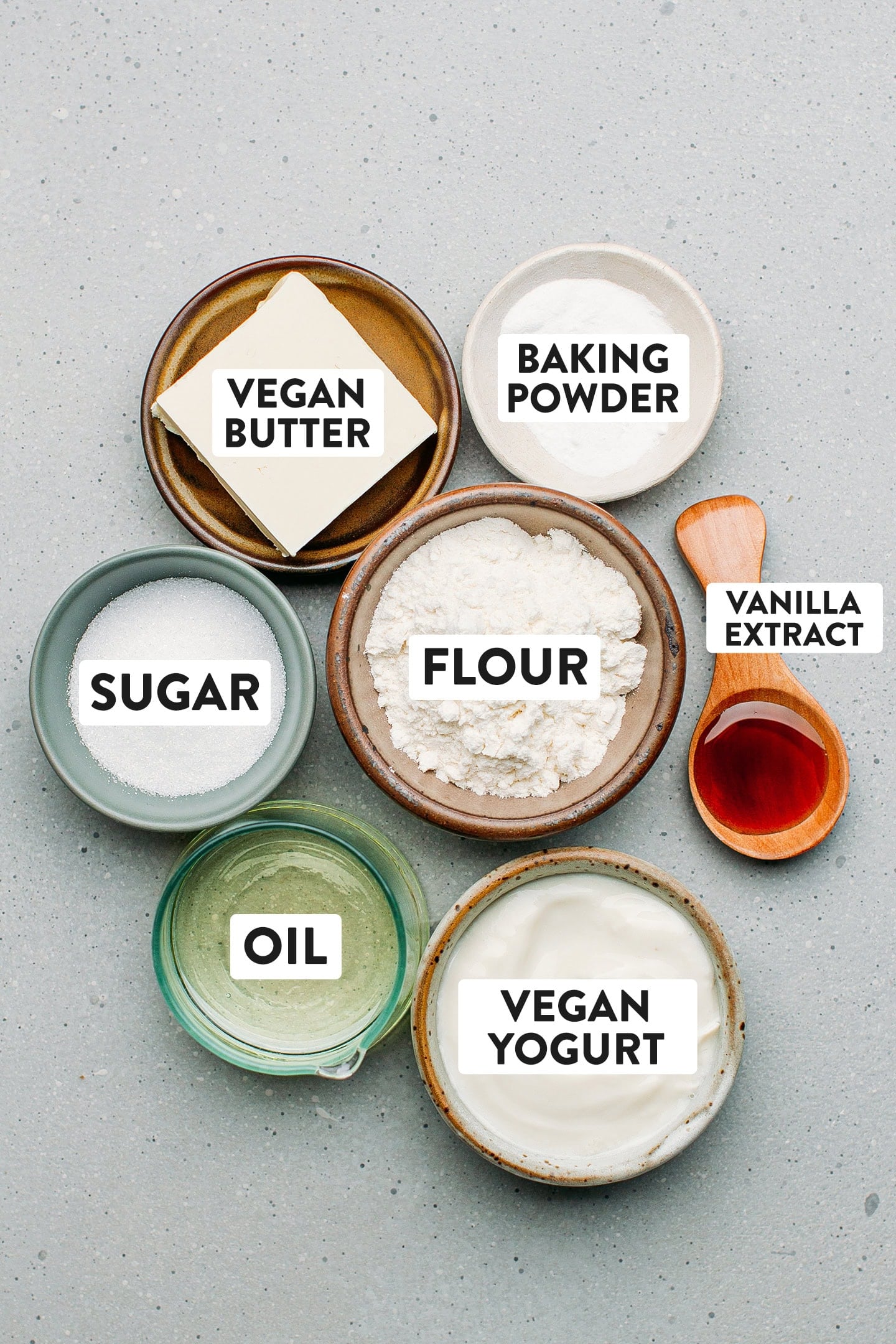
- Flour – I use basic all-purpose flour for this recipe, as it’s the one used in most classic pound cake recipes. There is no need to use bread or cake flour here.
- Plant-based yogurt – After trying different egg alternatives, such as aquafaba and applesauce, I finally settled on unsweetened plant-based yogurt. It gave the best and most consistent texture, bringing moisture and tenderness to the cake. Since I always have soy yogurt in my fridge, I used that, but any vegan yogurt will work.
Note: You can use any vegan yogurt as long as it is unsweetened and unflavored. Blended silken tofu works too. - Sugar – Like in traditional recipes, I went with granulated white sugar. The main advantage of using white sugar is that it has a bland flavor as opposed to other types of sugar, like coconut sugar or maple syrup. This allows the vanilla flavor to shine!
- Butter – You can use store-bought or homemade vegan butter. Butter not only adds the needed richness but also a lot of flavor! I do not recommend replacing it with oil, as it would alter the flavor and the texture.
Brand recommendations: If you use store-bought butter, I got great results with Flora. Earth Balance, Country Crock, or Violife will also work well. I had the best results with brands that are firm when chilled. Stay away from the spreadable butter. - Oil – The addition of oil does two things. First, it brings extra richness to the crumb. Secondly, it helps the cake stay softer for longer. See, oil always results in a more tender crumb compared to butter. Cakes made with only butter tend to dry very quickly. Adding oil prevents that!
Note: Use a neutral oil such as canola, grapeseed, or sunflower. I advise against using coconut oil as it imparts a coconut flavor to the cake. - Vegan milk – Any unsweetened vegan milk will work. You can use almond, cashew, or even oat milk. I only use a very small amount of milk to thin the batter since the yogurt already brings a lot of moisture.
- Vanilla extract – For the best aroma, opt for high-quality vanilla extract. You can elevate the flavor even further by replacing the vanilla extract with the seeds from half of a vanilla bean or the sugar with vanilla sugar.
- Baking powder – I used standard baking powder to help the cake rise and achieve a fluffier texture. Do not substitute with baking soda, as the results would be completely different.
- Salt – A pinch of salt goes a long way in enhancing the overall flavor. If you use salted butter, omit the salt.
🥣 Step-by-Step Instructions

- Add the dry ingredients to a bowl. Add the flour, sugar, baking powder, and salt to a large mixing bowl.
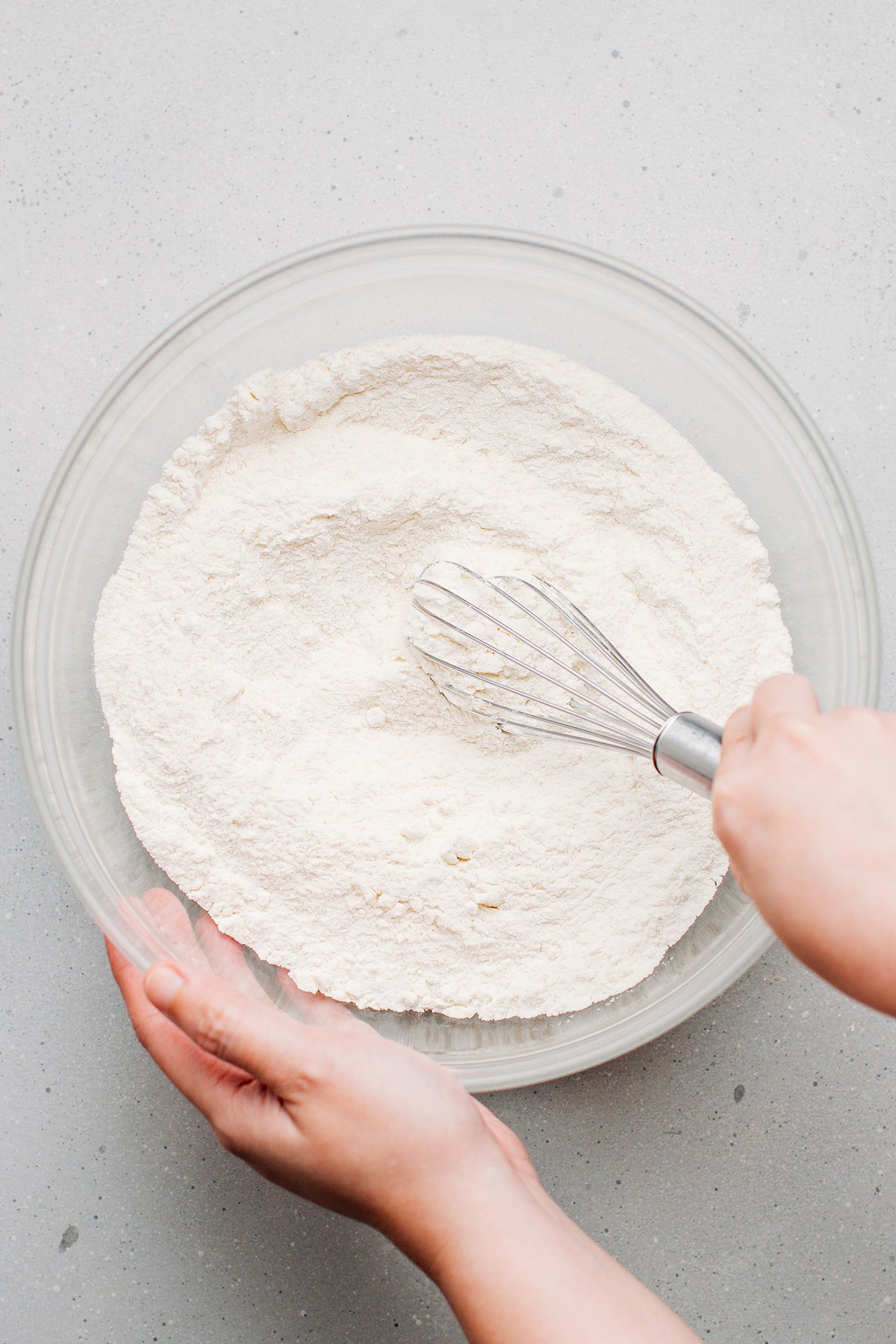
- Whisk. Use a whisk to combine the dry ingredients.

- Pour in the wet ingredients. Pour the melted vegan butter, yogurt, oil, and plant-based milk.

- Whisk. Whisk until smooth. The batter will be very thick.
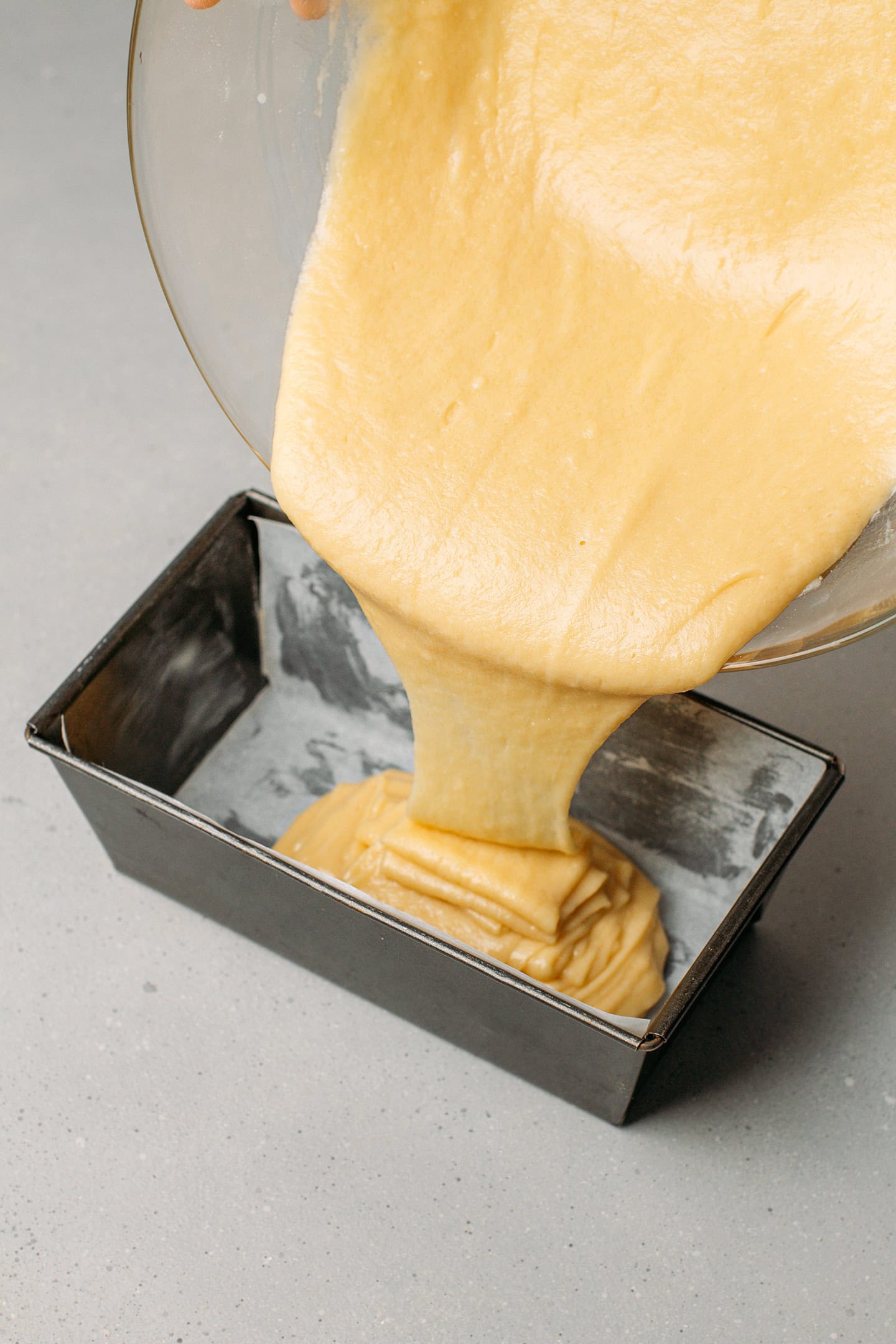
- Transfer to a cake pan. Once the batter is smooth, transfer it to an 8×4-inch loaf pan.
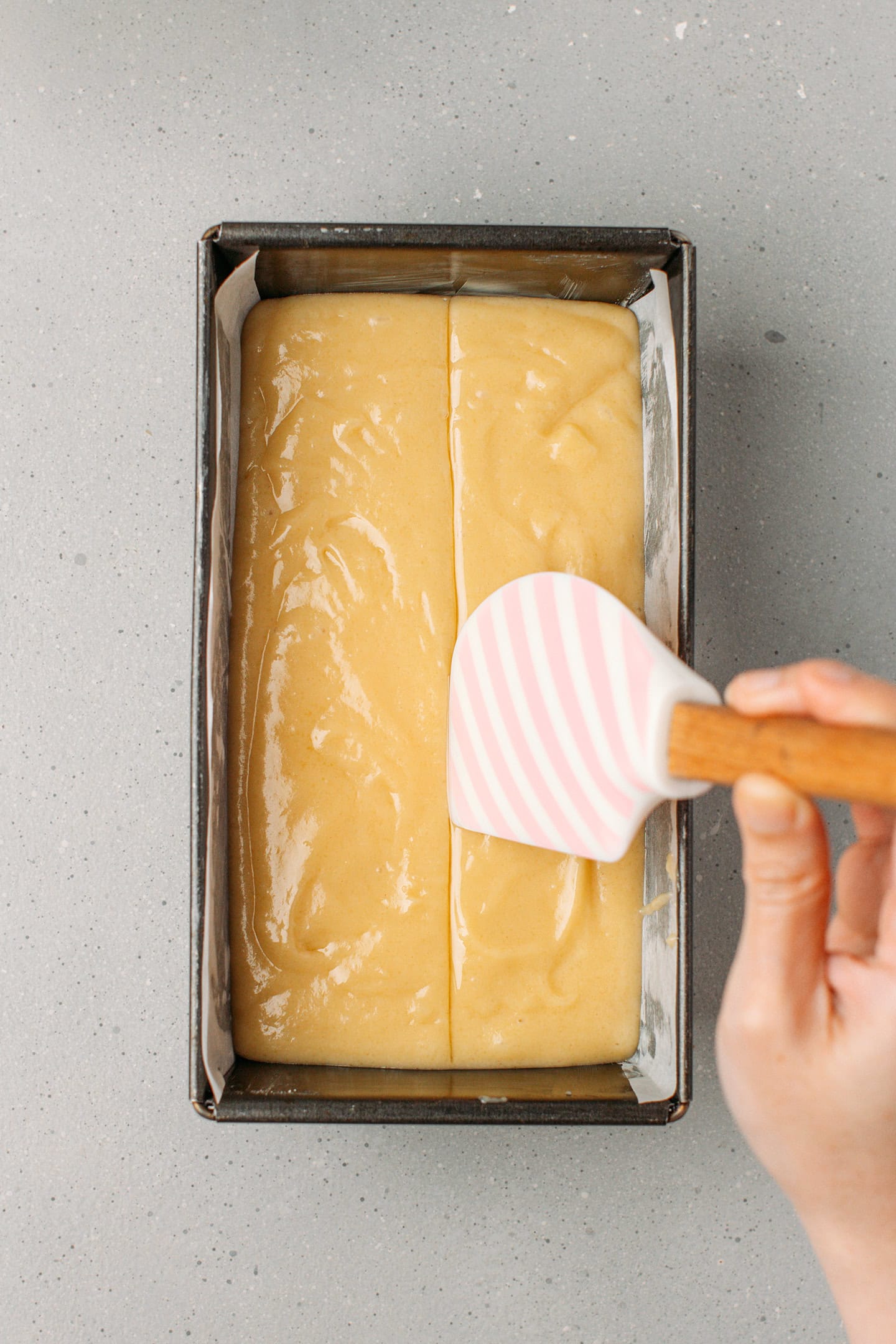
- Spread the top into a smooth and even layer.
Secret Tip! Here is my secret tip to get the cake to split exactly in the middle. Dip a spatula in oil or melted butter, then draw a line across the center of the batter. This will allow the cake to crack precisely in the middle, not more cracks on the side! Creating that line of oil or butter in the middle of the batter is the magic trick to give your cake an aesthetic look.
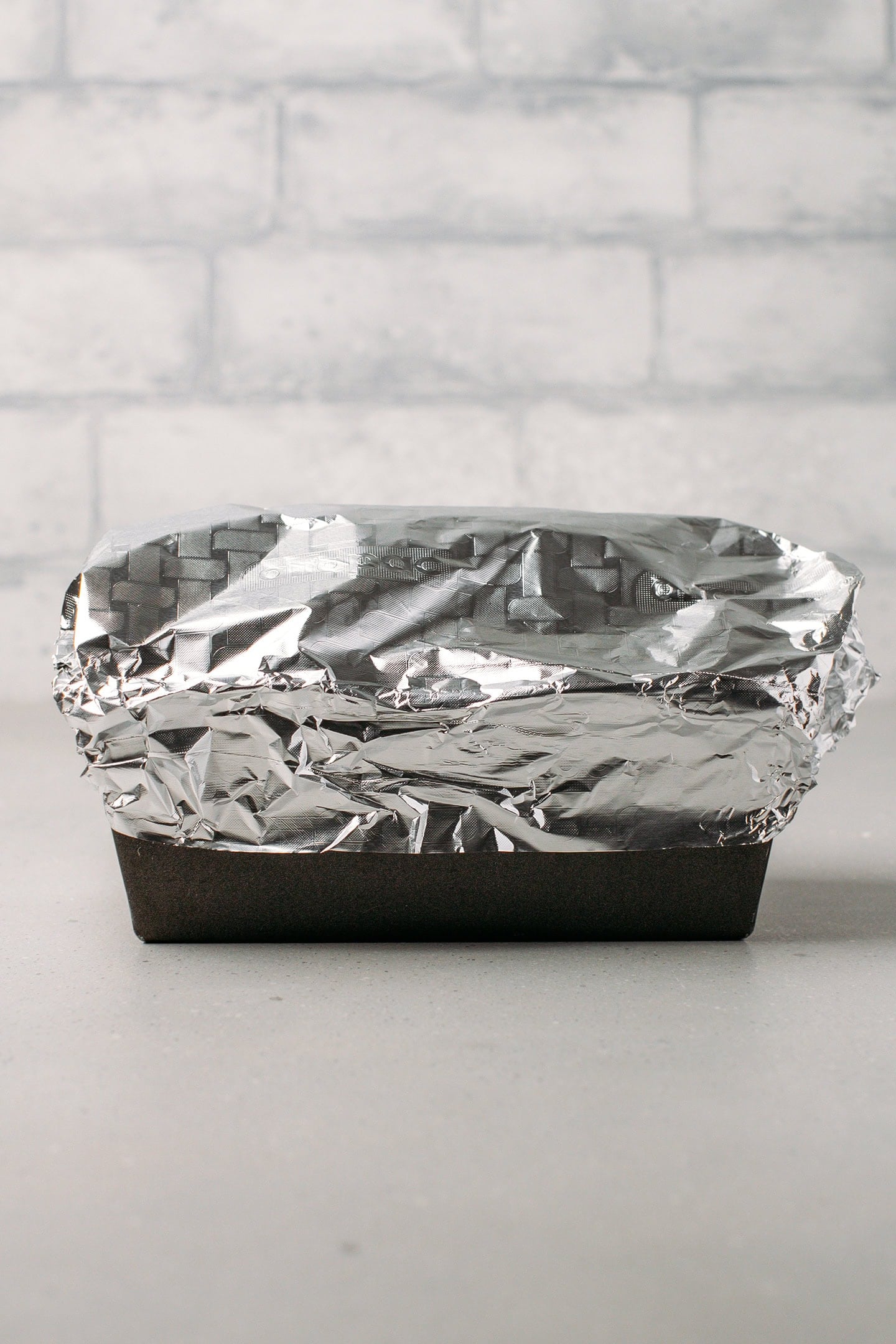
- Cover with foil. Cover the loaf pan with aluminum foil.
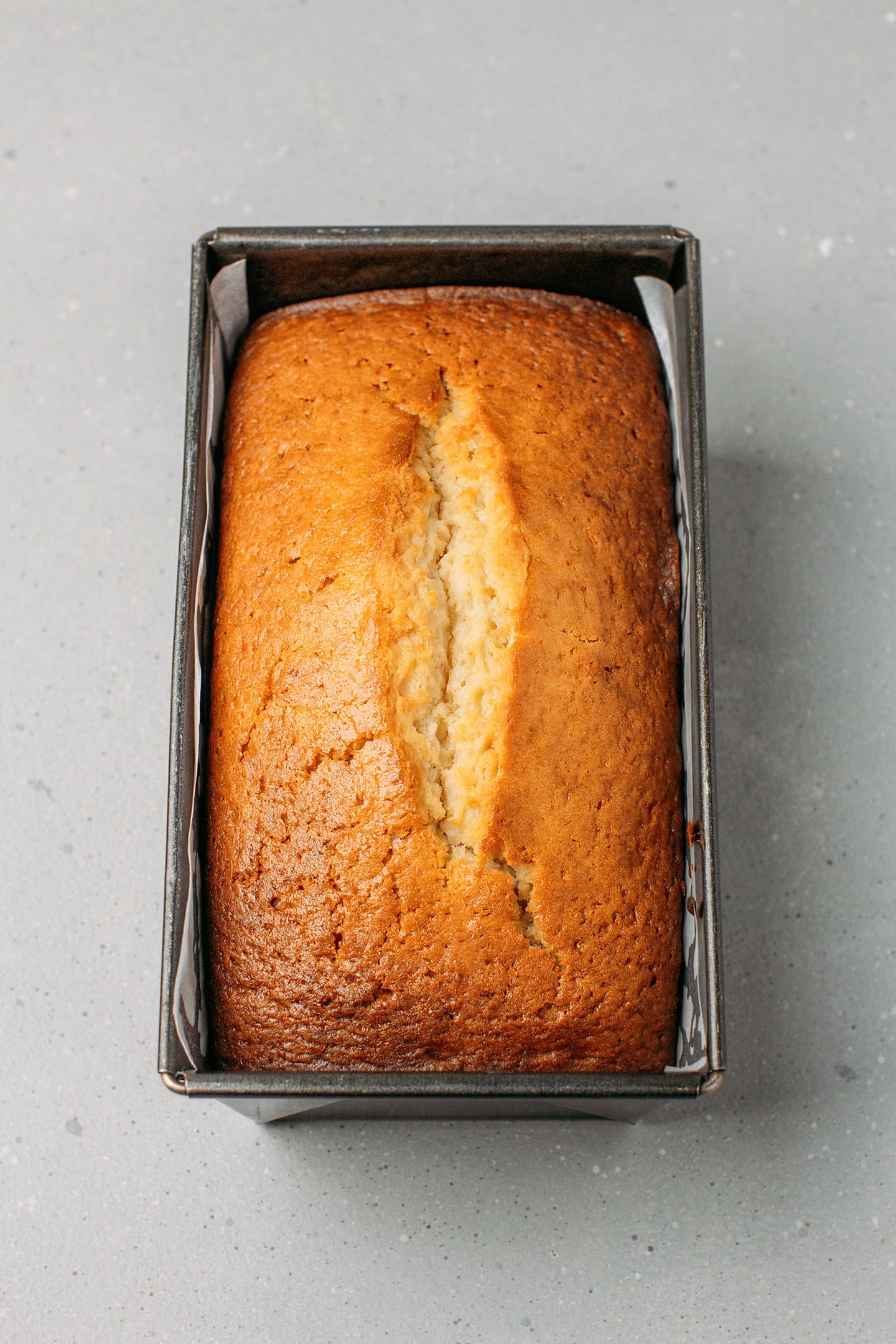
- Bake. Bake for 25 minutes covered. Then, remove the foil and bake for an additional 25-30 minutes or until golden brown.
📔 Pro Tips
Measure ingredients using a kitchen scale. As cup measurements can be inaccurate, I am sharing the measurements in metric units. A kitchen scale is essential in baking, as it yields the most consistent results.
Do not make substitutions. I do not recommend making any substitutions, as this recipe is not versatile.
Ensure your ingredients are at room temperature. Before mixing the ingredients together, make sure the yogurt, melted butter, and plant-based milk are at room temperature. If your butter is too hot, it will activate the baking powder, and your cake won’t rise well during baking.
Soften the crust. The crust tends to be slightly crispy straight out of the oven. Cover your pound cake with plastic wrap after baking if you want it to be soft all the way through. It will keep the moisture and soften the crust.
Allow the cake to cool completely. Let the cake cool for at least 30 minutes before transferring to a cooling rack. Then, let it cool completely before slicing.
🍫 Variations
This delicate pound cake is delicious as is, but you can enhance it by incorporating:
- Chocolate chip: Add 3/4 cup of chocolate chips or chocolate chunks into the batter for extra sweetness. If you add chocolate chips, I suggest reducing the amount of sugar in the batter by about 25%.
- Caramel: Either swirl in caramel sauce or try my caramel pound cake recipe, where the caramel sauce is incorporated directly into the batter!
- Dried fruit: Add about 3/4 cup of finely chopped dried fruits, such as figs, orange peel, dates, or raisins. Just like with chocolate chips, I recommend lowering slightly the amount of sugar in the batter.
- Orange: Add the zest from one orange to the batter.
- Lemon: I have made a specific recipe for lemon pound cake here!
- Marble: Divide the batter in half and add 3-4 tablespoons of cacao powder and 1 tablespoon of milk to one of them. Then, pour half of the vanilla batter into the pan and top with half the chocolate batter. Repeat once.
- Cinnamon: Add 3/4 teaspoon of ground cinnamon for a holiday-spiced pound cake. You can even combine the cinnamon with orange zest!

🍵 What to Serve It With
You can serve this vegan pound cake as an afternoon snack with tea or coffee, for dessert with a dollop of whipped cream and fresh berries, or for breakfast with almond yogurt or cashew yogurt!
❄️ Storing and Freezing
- To store: Store this pound cake covered with plastic wrap at room temperature for up to 5 days.
- To freeze: This pound cake freezes very well. You can freeze it whole or in slices. Wrap it in plastic wrap and then in aluminum foil. It will keep for up to 3 months in the freezer. Thaw for a few hours at room temperature.

💬 Troubleshooting & FAQs
Yes, you can reduce the amount of sugar. Please check above for my tests.
I didn’t develop this cake recipe to be gluten-free, but you may try using a 1:1 gluten-free baking blend. I cannot assure you it will work, as I haven’t personally tried it, though.
You can test the doneness by pricking the pound cake with a toothpick. If it comes out with a few crumbs, it’s done. If it’s still wet, bake for a few more minutes.
Depending on your oven, you might have to adjust the temperature slightly. If you notice your cake browning very quickly, turn the oven down and bake at a lower temperature for longer.
The batter will become grainy if you mix hot/warm butter with cold ingredients such as yogurt or milk. Make sure to take both out of the refrigerator for at least 30 minutes before starting.
If you are looking for an elegant, buttery, and dense pound cake that tastes just as good as the classic without the eggs, you will love this recipe!
🍰 More Vegan Cake Recipes
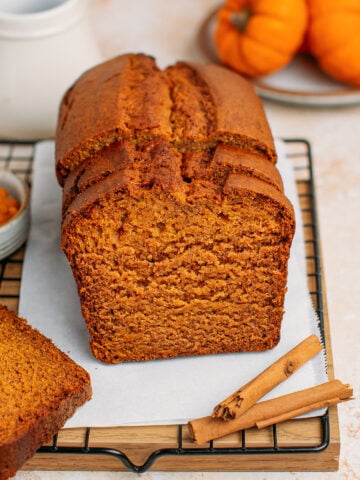


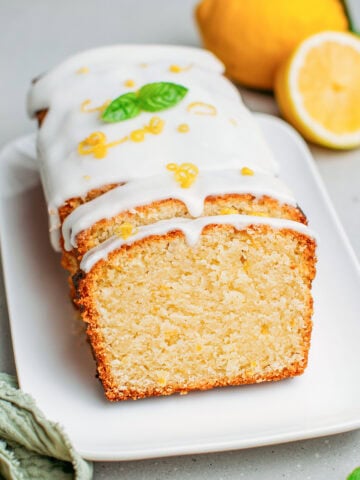
⭐️ Did you like this recipe? Let us know in the comments below, and tag us on Facebook, Instagram, or Pinterest!
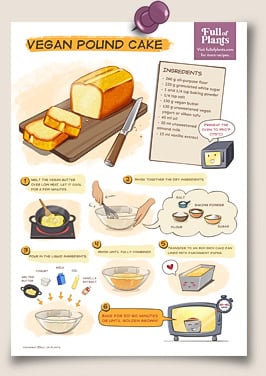
Print the Illustrated Recipe!
Put it in your recipe binder or hang it on your fridge with a magnet!

Save this recipe!
Enter your email below and I’ll send it to your inbox!
Plus, you will receive new recipes every week!
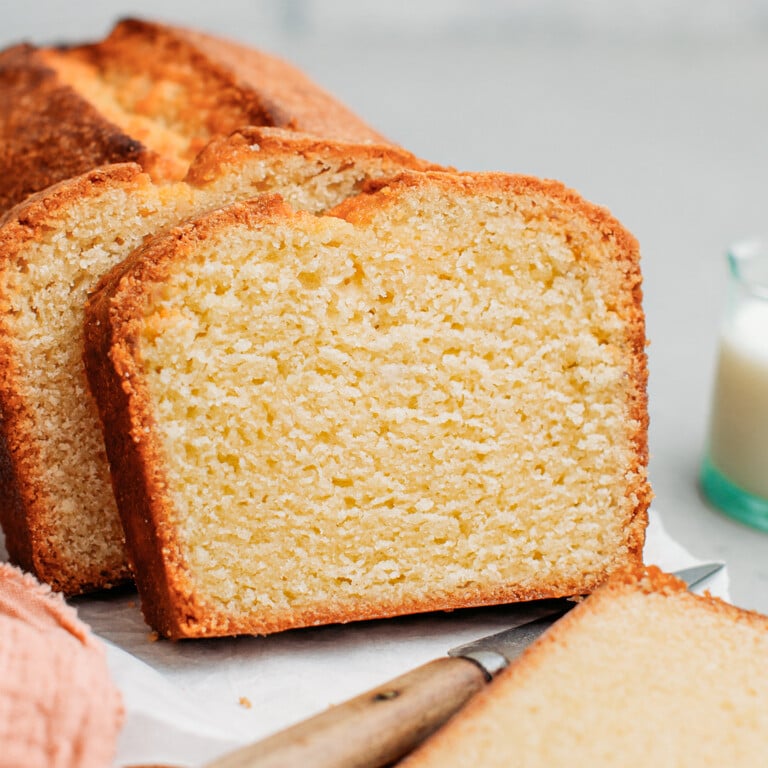
Moist and Buttery Vegan Pound Cake
Equipment

Ingredients
- 2 cups and 1 tbsp (260 g) all-purpose flour
- 1 cup and 2 tbsp (220 g) granulated white sugar
- 1 and 1/4 tsp baking powder
- 1/4 tsp salt
- 9 tbsp (130 g) melted vegan butter
- 1/2 cup and 1 tbsp (130 g) unsweetened plant-based yogurt or silken tofu
- 3 tbsp (45 ml) oil
- 2 tbsp (30 ml) unsweetened plant-based milk
- 1 tbsp (15 ml) vanilla extract
Instructions
- Preheat the oven to
 350 °F (175°C) and line an 8×4-inch loaf pan with parchment paper. Before starting, make sure the yogurt, melted butter, and plant-based milk are at room temperature.
 - Whisk together the dry ingredients. Add the flour, sugar, baking powder, and salt to a large mixing bowl. Whisk until combined.
- Melt the butter. Melt the vegan butter over low heat until just melted. You do not want the butter to be hot. Otherwise, it will activate the baking powder. If the butter is too hot, let it cool for a few minutes.
- Whisk in the wet ingredients. Pour the melted vegan butter, yogurt, oil, plant-based milk, and vanilla extract into the dry ingredients. Whisk until combined. The batter will be very thick. This is normal.
- Transfer to a cake pan. Once the batter is smooth, transfer it to the loaf pan and spread the top into a smooth and even layer.
- Make a split. Dip a spatula in oil or melted butter and draw a line in the middle of the batter, lengthwise. This will allow the cake to crack precisely in the middle. Creating that line of oil or butter in the middle of the batter is the magic trick to give your cake an aesthetic look.
- Bake. Cover the loaf pan with aluminum foil (try to shape it into a dome so the cake doesn't touch the aluminum as it rises) and bake for 25 minutes. Remove the foil and bake for an additional 25-30 minutes or until golden brown. You can test the doneness by inserting a toothpick inside the pound cake. If it comes out with a few crumbs, it’s done.
- Let the pound cake cool completely before slicing. This pound cake will keep for up to 5 days stored at room temperature.

Notes
- Measure ingredients using a kitchen scale. As cup measurements can be inaccurate, I am sharing the measurements in metrics. A kitchen scale is essential in baking, as it yields the most consistent results.
- Do not make substitutions. I do not recommend making any substitutions as this recipe is not versatile.
- Ensure your ingredients are at room temperature. Before mixing the ingredients together, make sure the yogurt, melted butter, and plant-based milk are at room temperature. If your butter is too hot, it will activate the baking powder and your cake won’t rise well during baking.
- Soften the crust. The crust tends to be slightly crispy straight out of the oven. Cover your pound cake with plastic wrap after baking if you want it to be soft all the way through. It will keep the moisture and soften the crust.
- Allow the cake to cool completely. Let the cake cool for at least 30 minutes before transferring to a cooling rack. Then, let it cool completely before slicing.
Nutrition

About the Author
Thomas Pagot is the founder, photographer, and recipe developer behind Full of Plants. He created the blog in 2016 as a personal cookbook for vegan recipes. Through years of recipe development, Thomas has successfully grown Full of Plants into a trusted resource for plant-based recipes.
Leave a Comment