
This post may contain affiliate links. Please read our disclosure policy.

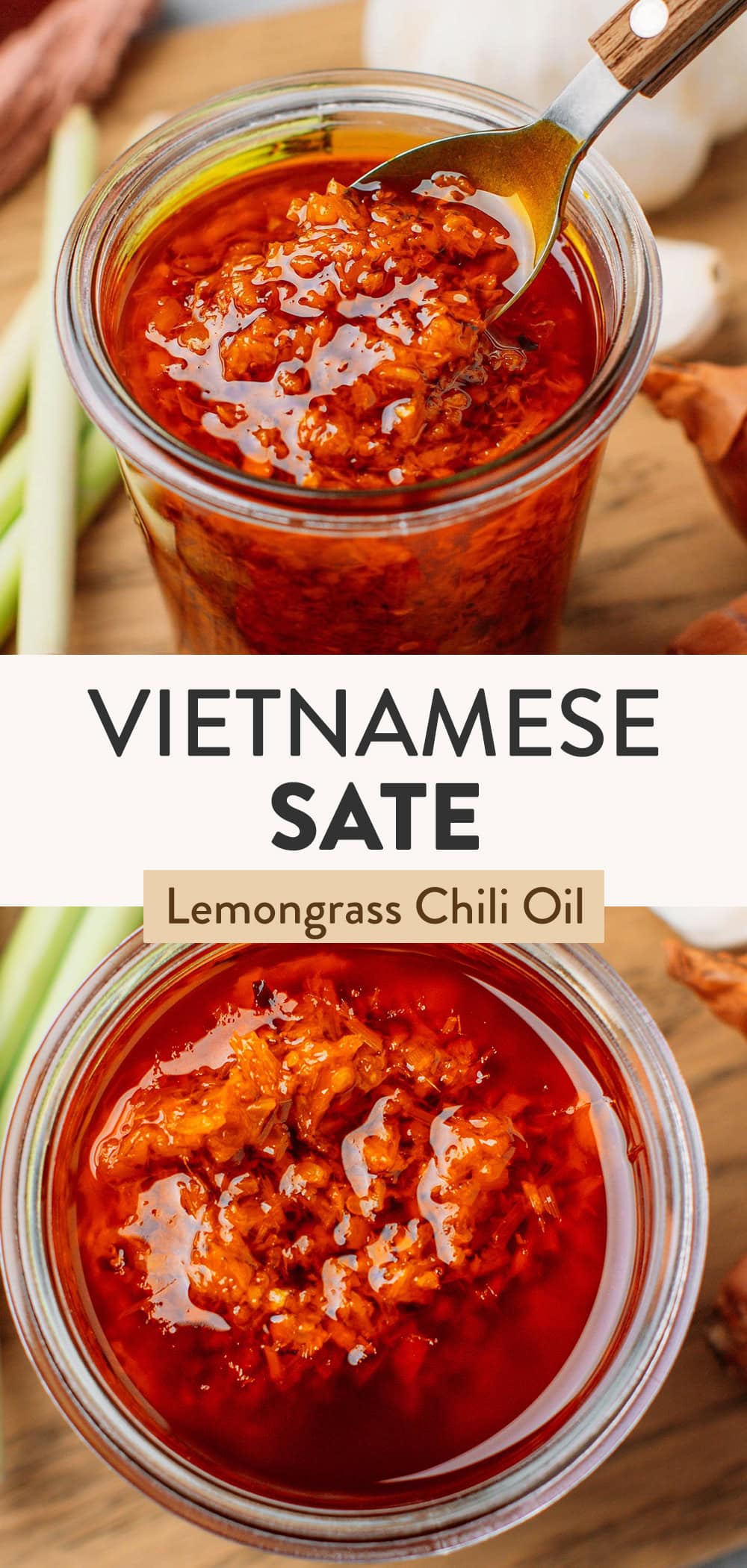
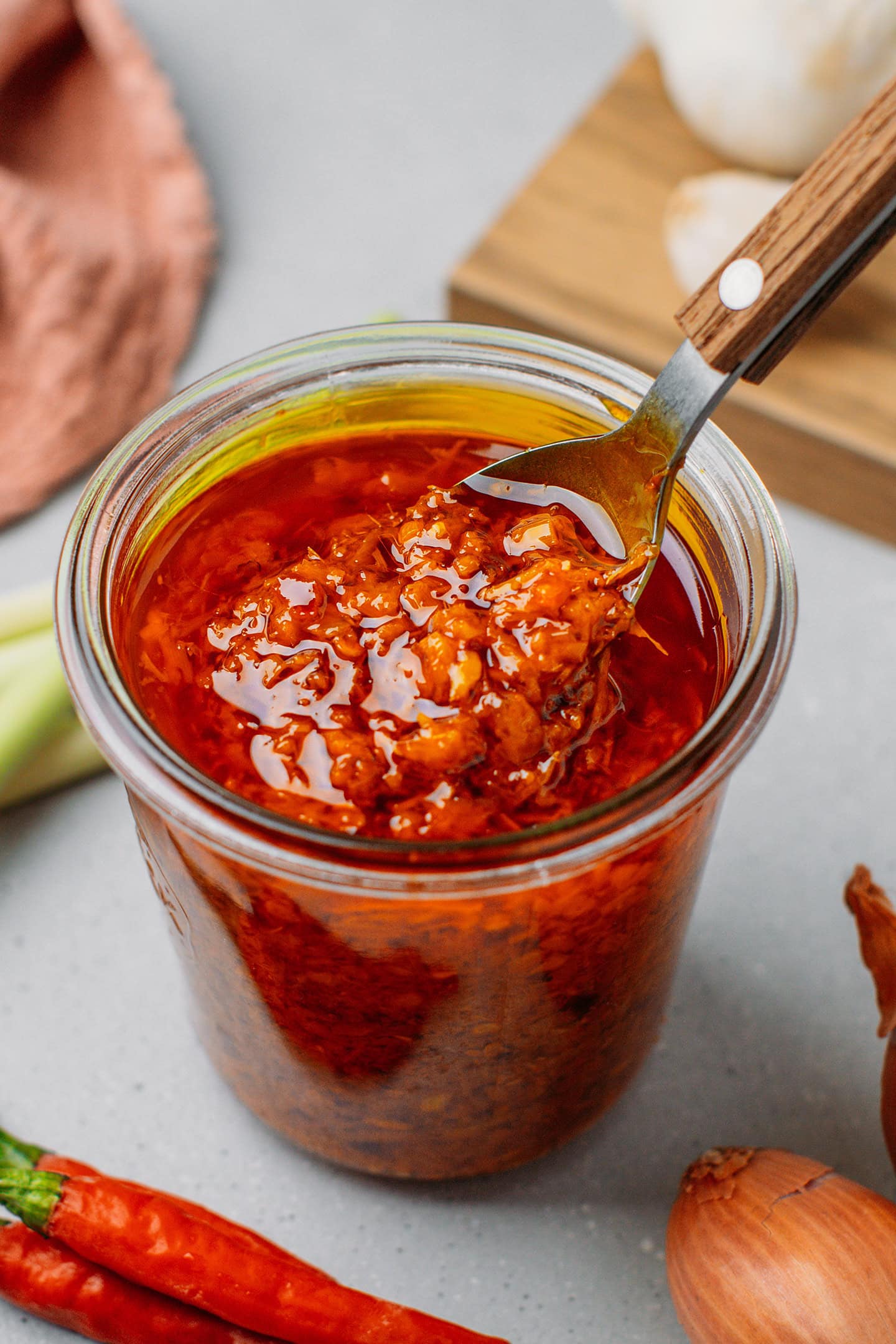
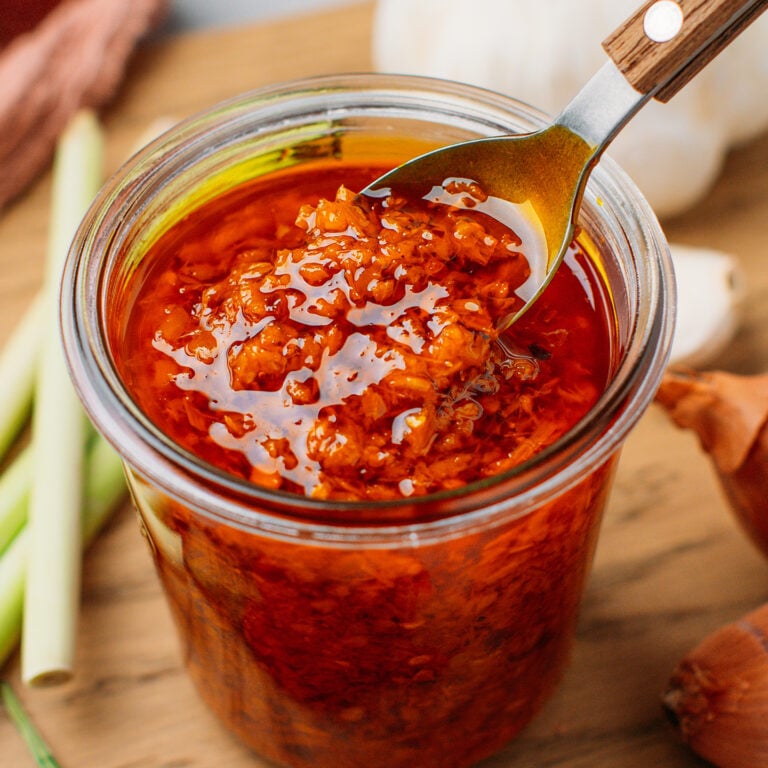
This authentic Vietnamese sate is a bold, lemongrass-packed chili oil that instantly transforms any dish. Made in one pot with garlic, shallots, and chili, it adds heat and savory depth to soups, noodles, marinades, and dipping sauces. Trust me, once you have a jar in the fridge, you’ll find yourself reaching for it constantly!
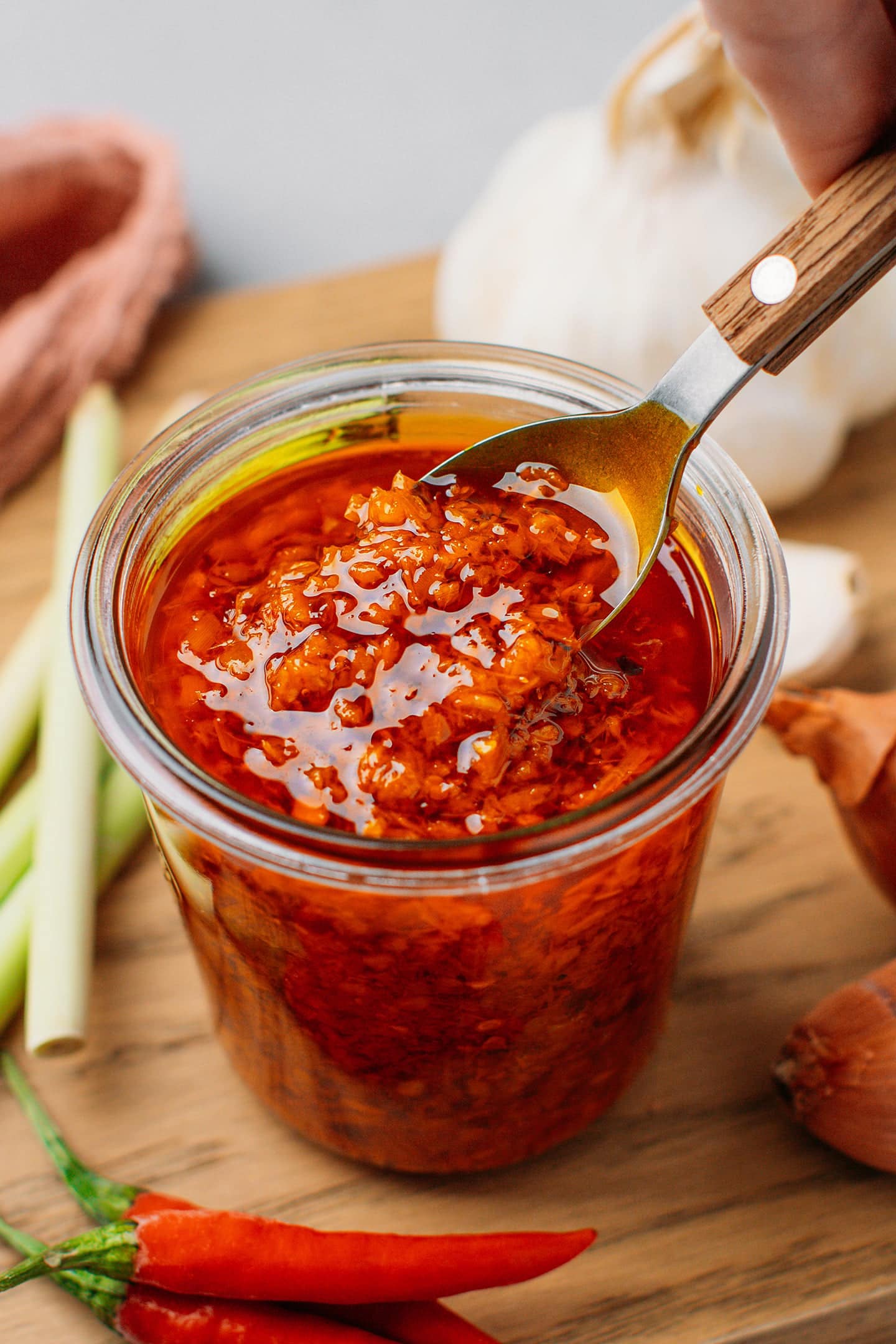
Vietnamese sate is a chili oil built around lemongrass. Bold, citrusy, and spicy, all at once.
This homemade sate is as authentic as it gets since the recipe was given to me by my Vietnamese mother-in-law. It’s made with simple ingredients in one pot. The aromatics are gently fried in oil to release their flavor, creating a spicy condiment with strong citrus notes that instantly elevates any bowl of Pho, rice paper salad, stir-fries, and noodles.
It’s a staple in our kitchen because it works across a dozen dishes.
📘 What Is Sate
Sate (ớt sa tế) is a spicy Vietnamese condiment typically made by infusing oil with chili, garlic, lemongrass, and shallots. It is commonly stirred into soups and broths, or used in marinades, to add heat and a citrusy aroma.
What is the difference between Vietnamese sate and satay?
These are two different things. Satay (also spelled saté) typically refers to grilled skewered meat served with a peanut sauce, a common dish in Indonesian, Malaysian, and Thai cuisines. Vietnamese sate, on the other hand, is a spiced chili oil.
🌶️ What You’ll Need
This recipe requires just 9 ingredients. Here’s what you will need:
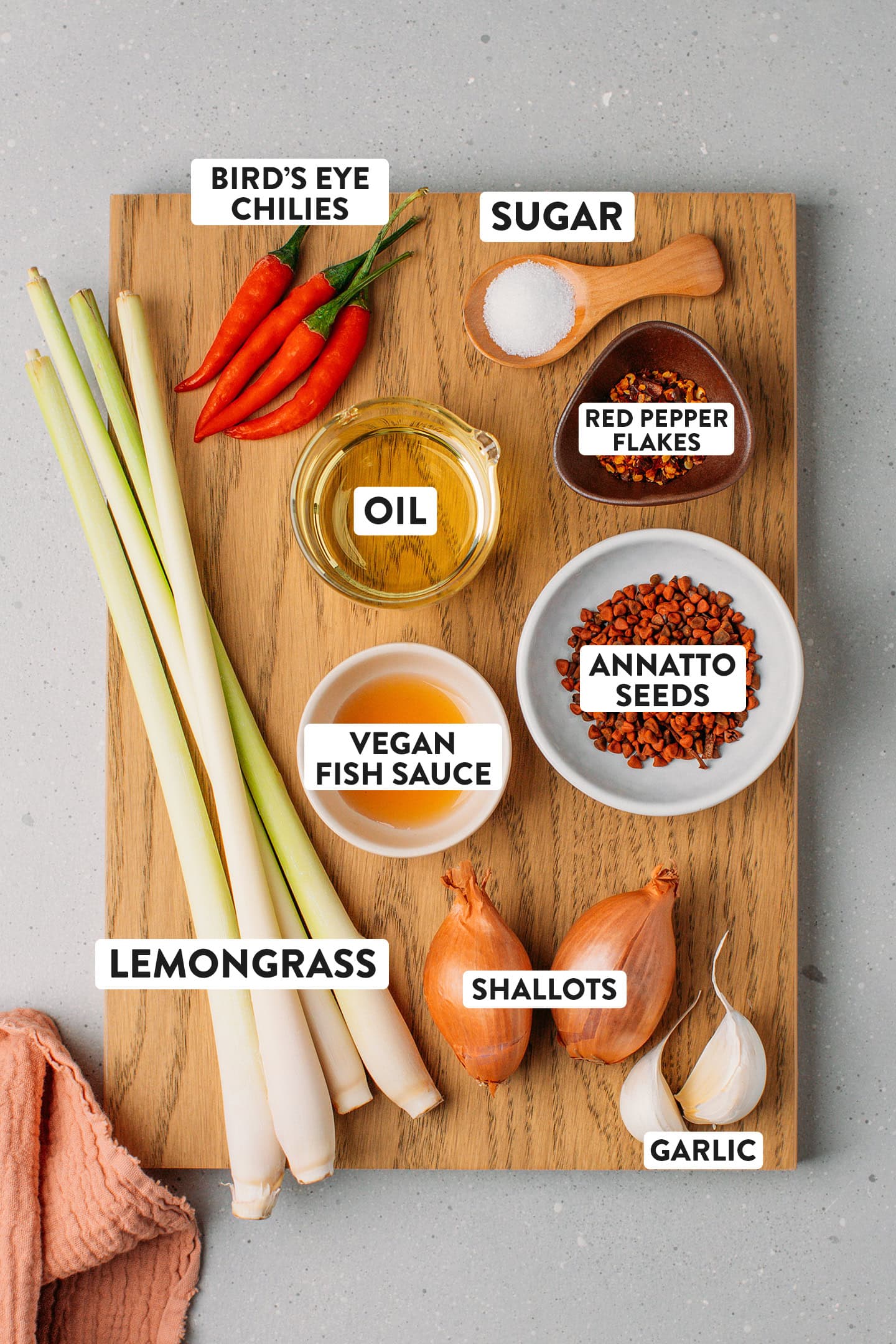
- Vegetable oil – Use a neutral oil like canola, grapeseed oil, or sunflower oil. Avoid coconut oil, which hardens at room temperature. For extra depth, you can add a teaspoon of toasted sesame oil at the end.
- Annatto seeds – These give the sate its signature red-orange color. Annatto seeds have a very subtle peppery aroma but do not significantly affect the flavor. You can omit them if you don’t have access to them.
- Lemongrass – The backbone of this recipe. It brings a citrusy, slightly gingery aroma.
Note: Both chopped fresh lemongrass and frozen chopped lemongrass work. - Chili – There is no sate without some spiciness! Use Thai bird’s-eye chili for serious heat, or a milder variety for less spiciness.
- Garlic – While this oil isn’t super garlicky, a couple of cloves of fresh garlic do add extra flavor.
- Shallots – I went with shallots as they are less pungent than onions, plus they give the sate a natural sweetness.
- Ground chili – For extra spiciness.
- Fish sauce – For umami and saltiness. Use store-bought vegan fish sauce or homemade vegan fish sauce.
- Sugar – You can use white sugar, coconut sugar, or maple syrup for a refined-sugar-free version.
🥣 Cooking Instructions
1. Prepare the aromatics
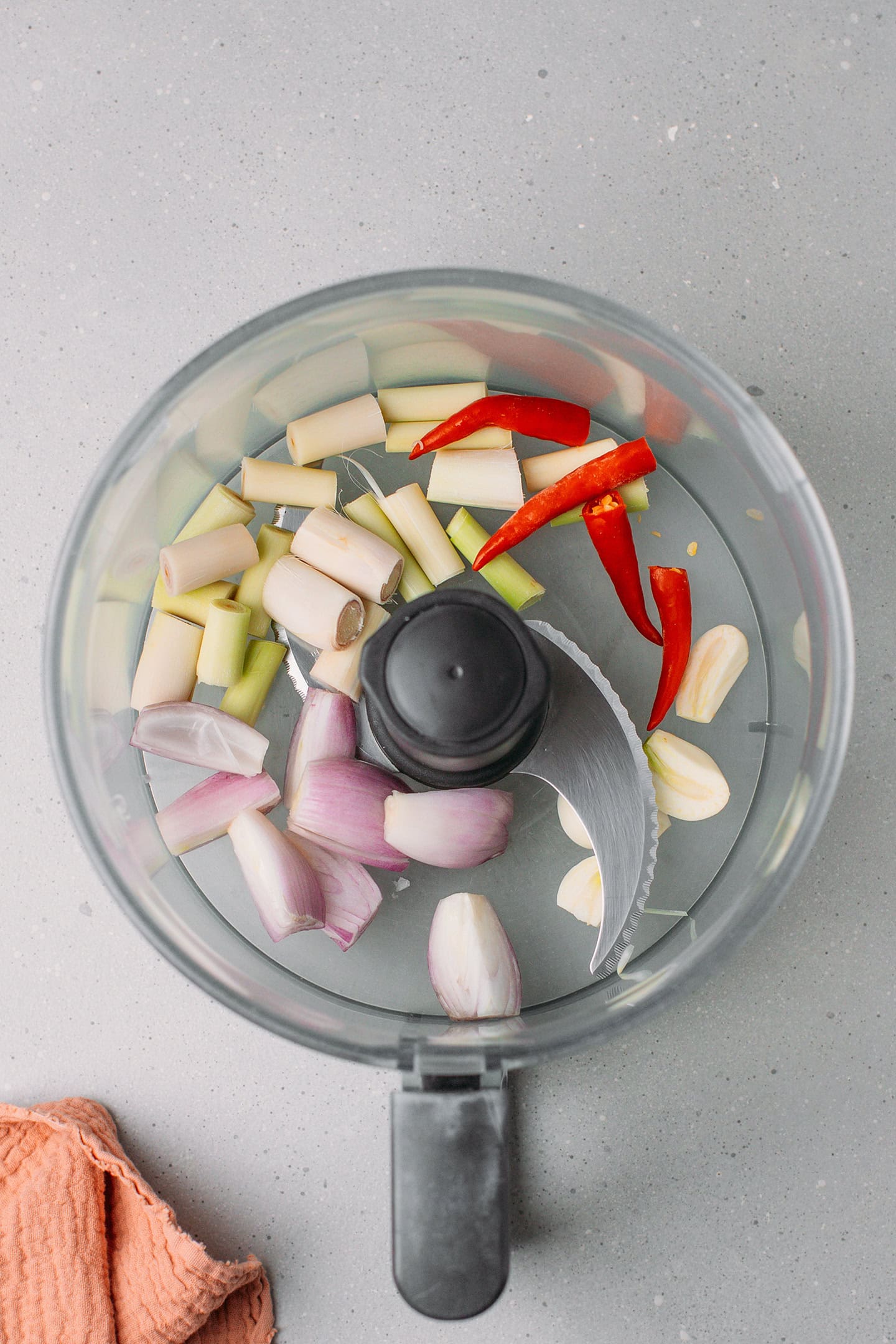
- Chop the aromatics. Roughly chop the lemongrass, shallots, and garlic. Add them with the chilies to a food processor.
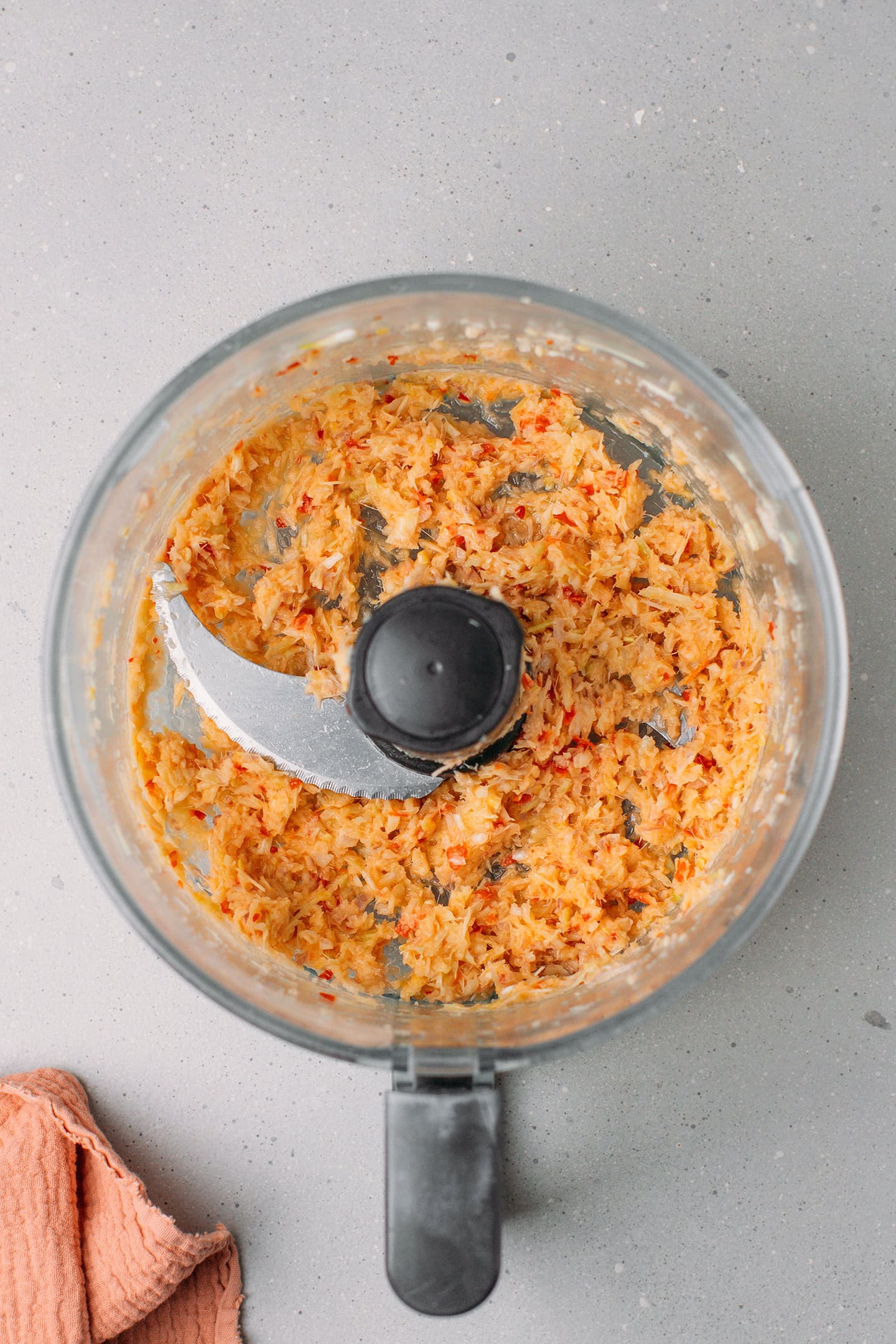
- Process. Next, add 1/4 cup of oil and process until the aromatics are finely chopped.
2. Cook the sate
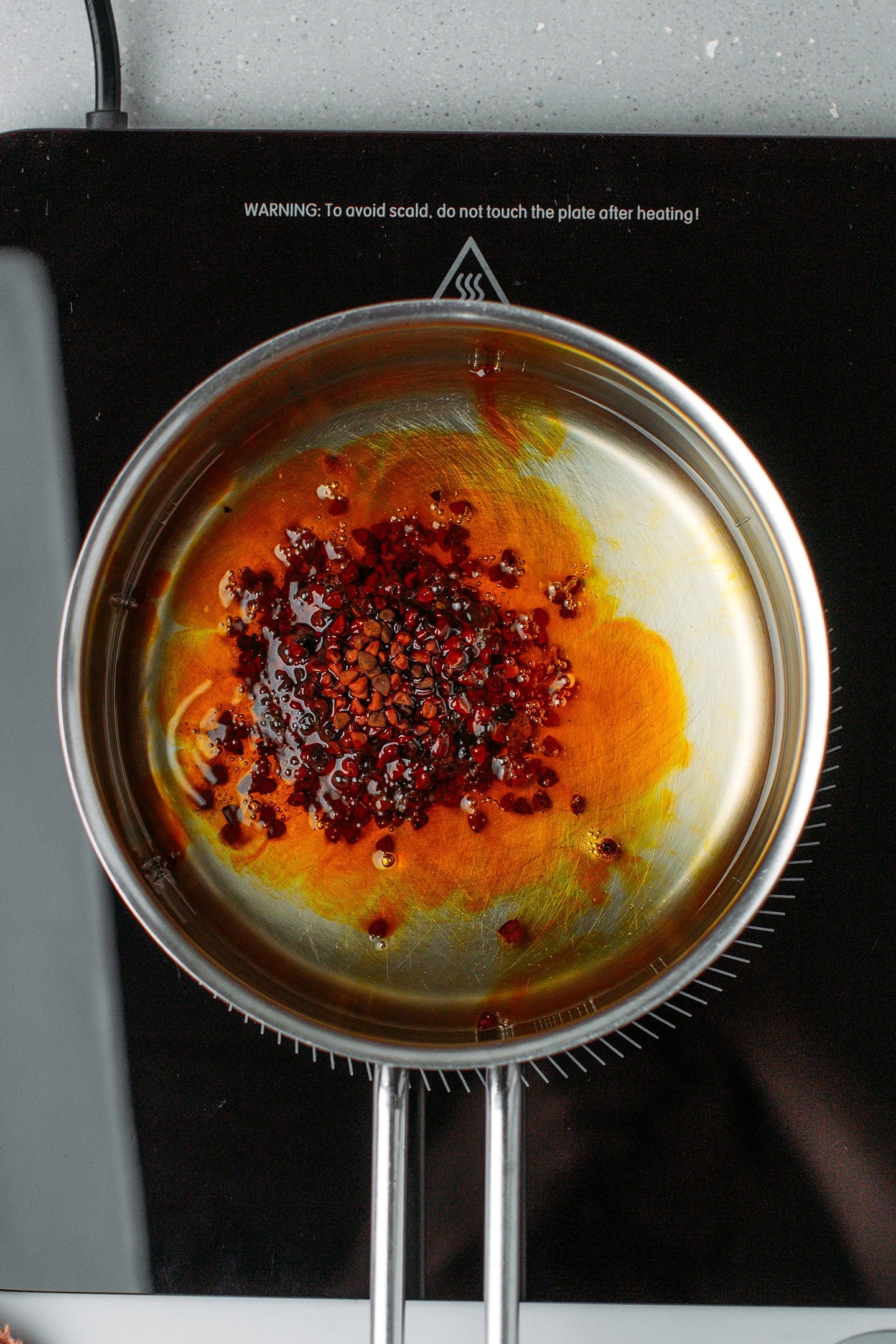
- Heat the oil. Heat the oil in a deep saucepan over medium heat. Once hot, add the annatto seeds.
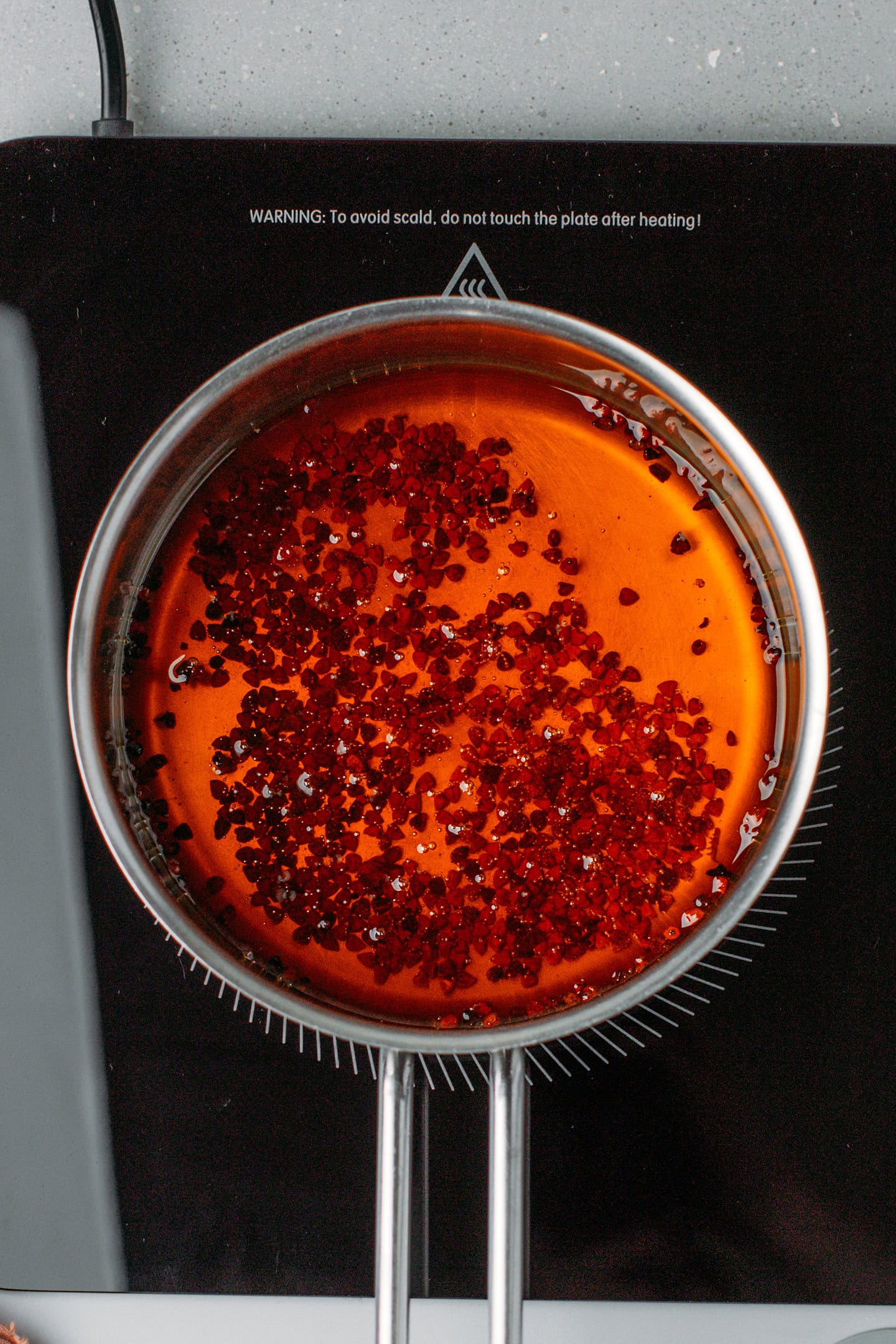
- Fry the seeds. Fry the annatto seeds for about 2 minutes or until the oil is orange.
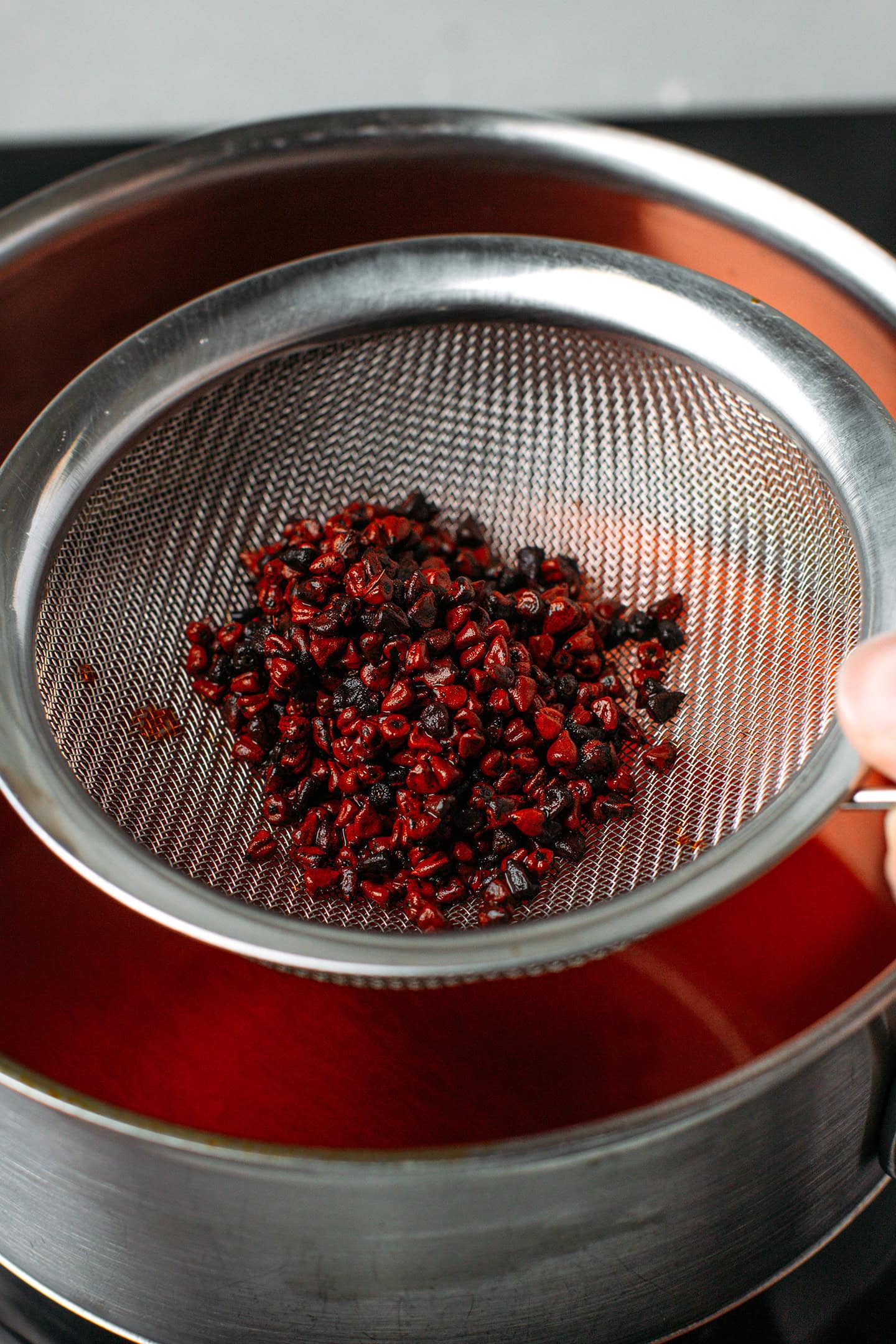
- Discard the seeds. Use a fine-mesh sieve to strain the oil, then discard the seeds.
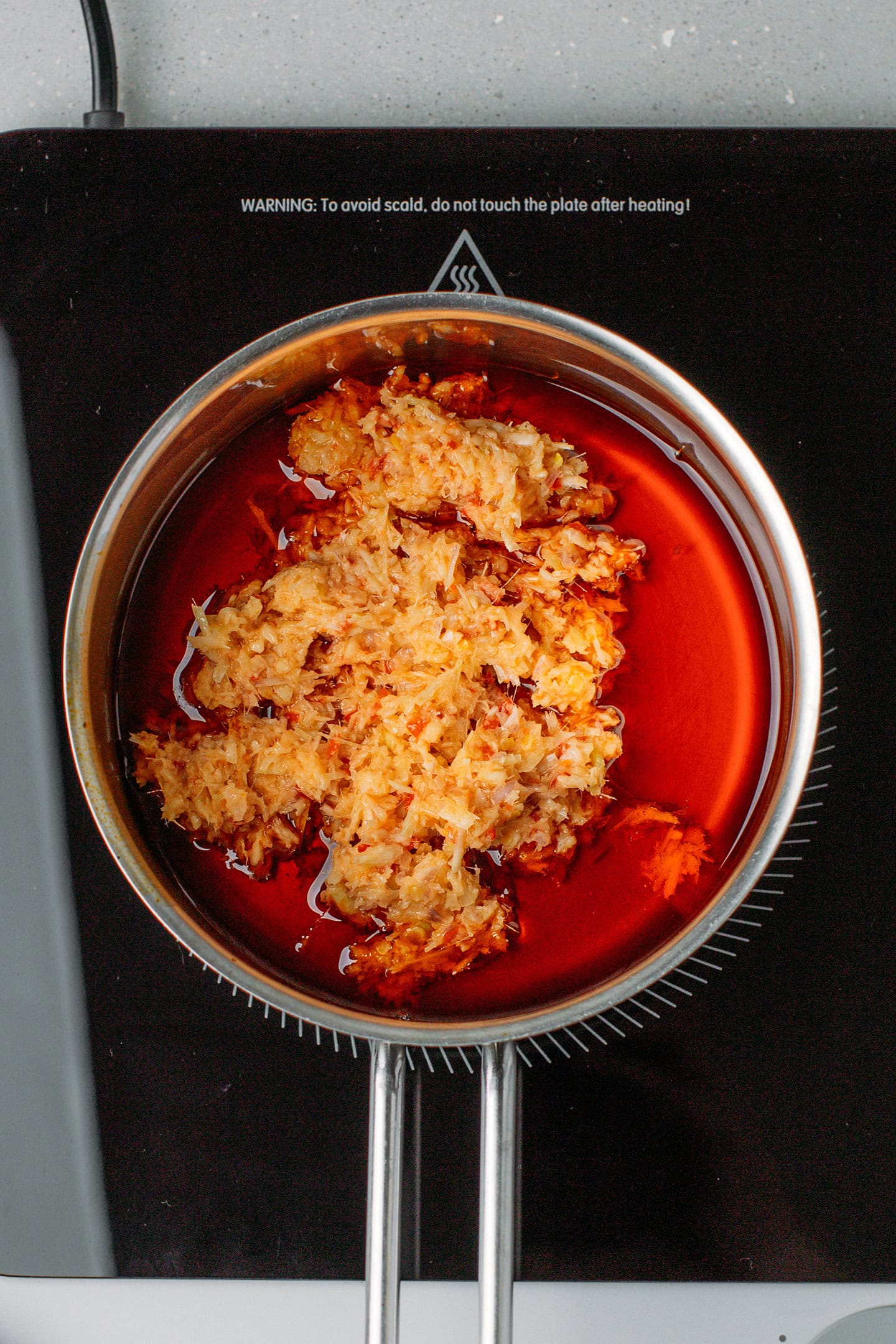
- Fry the aromatics. Add the minced aromatics and fry for 2 minutes, stirring frequently. Do not brown them.
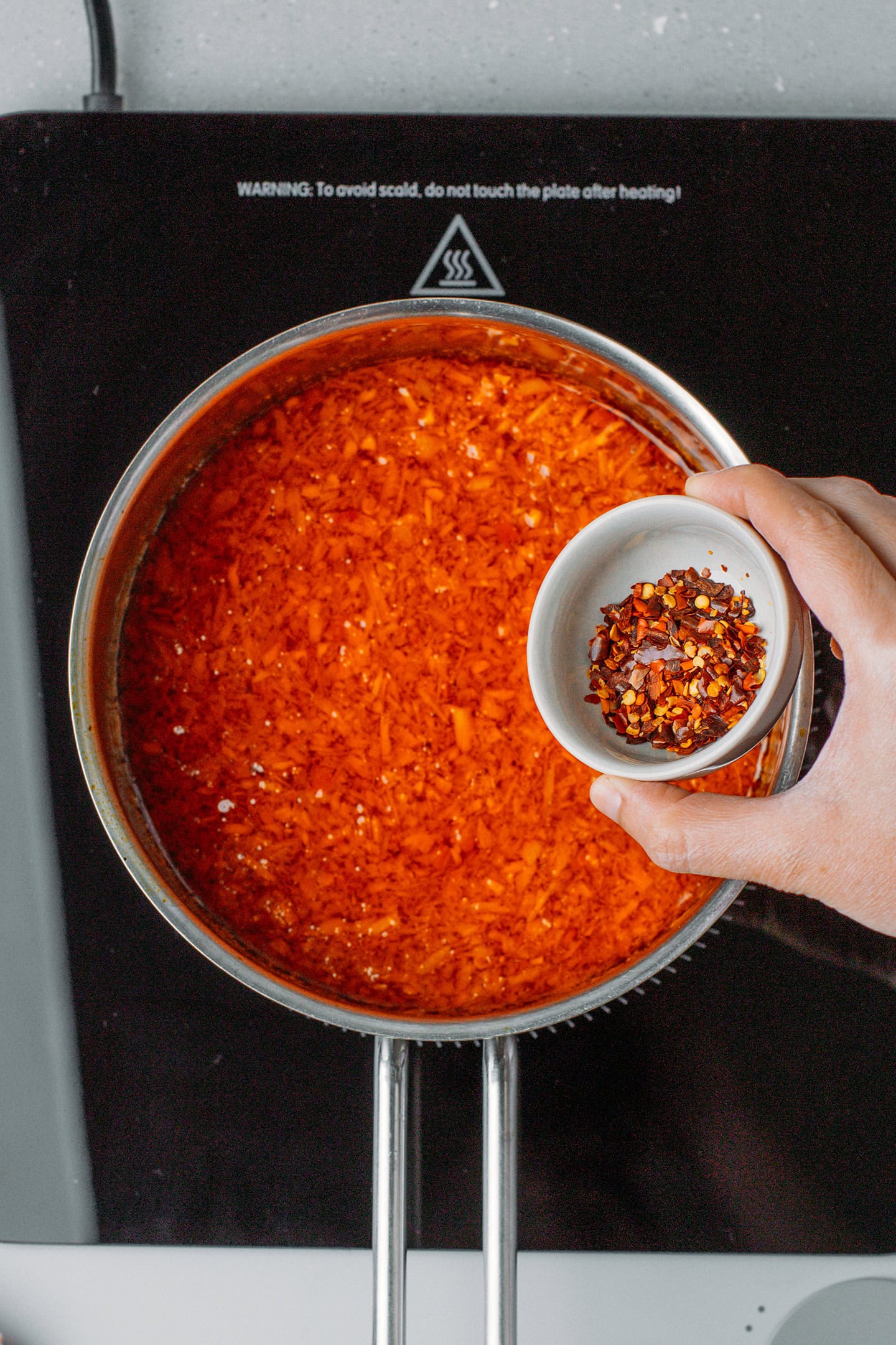
- Add the chili flakes. Add the chili flakes and sauté for one more minute. Turn off the heat.
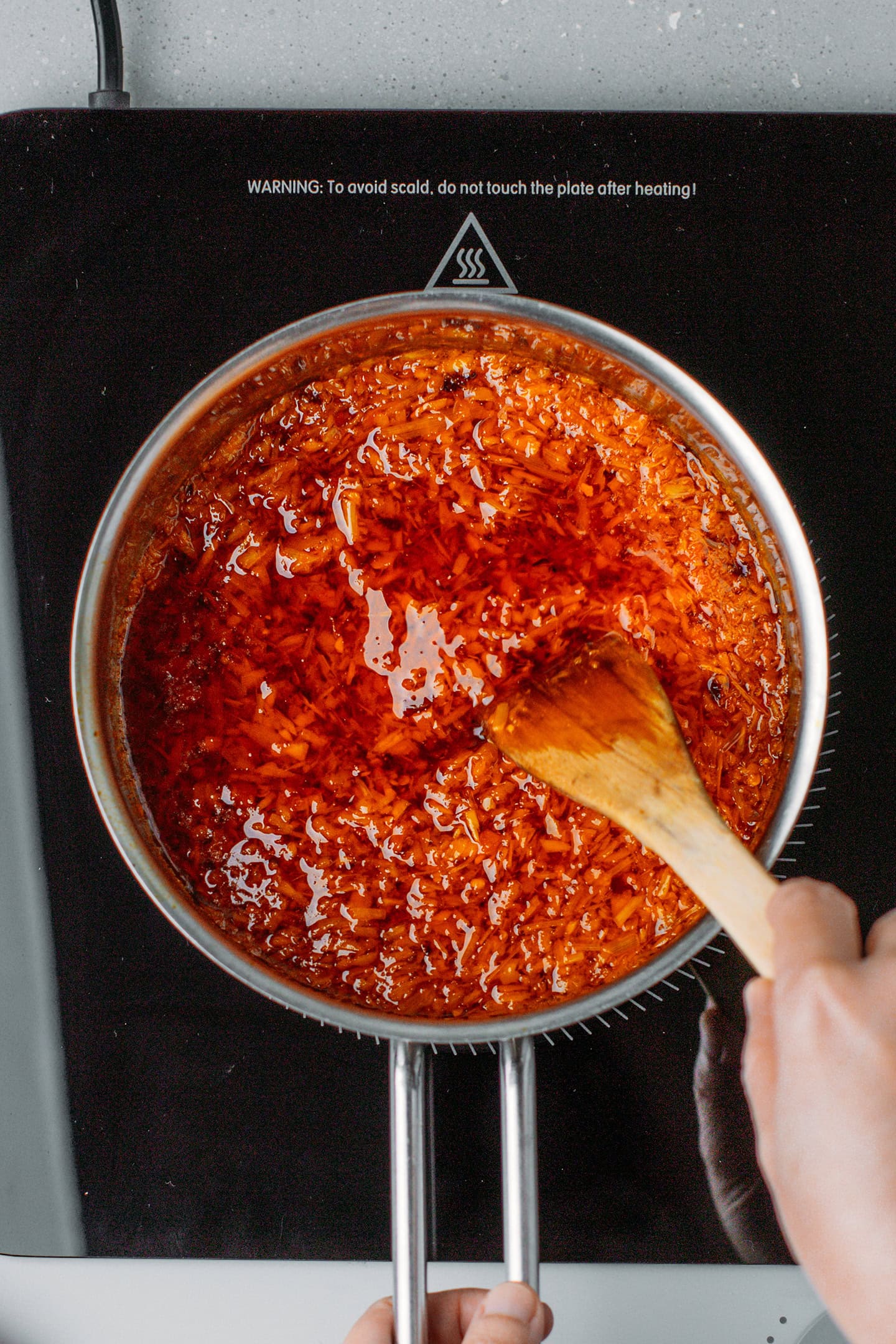
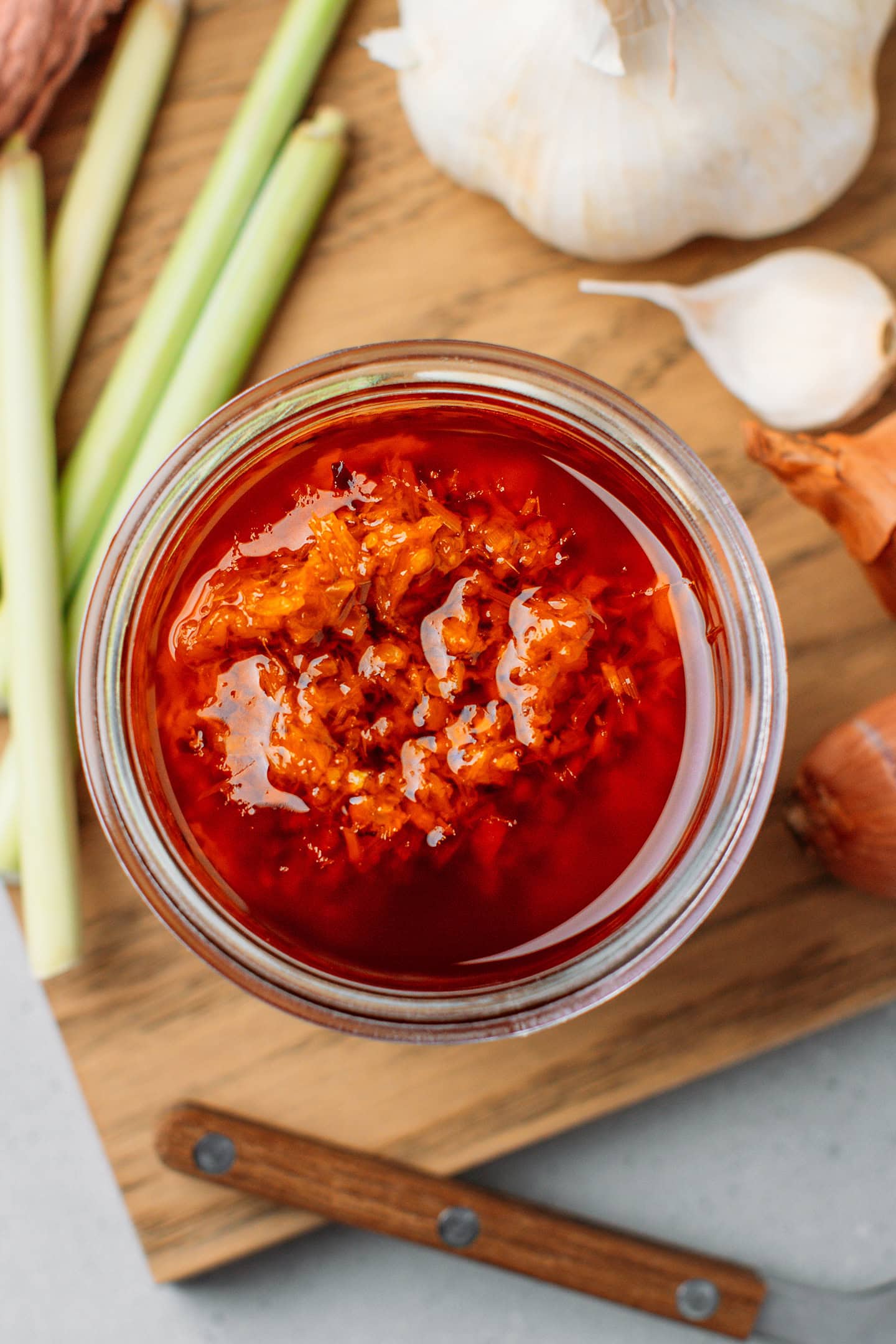
- Add the remaining ingredients. Stir in the vegan fish sauce and sugar. Let cool completely before transferring to a clean glass jar.

📔 Vân’s Tips
Don’t brown the aromatics. It’s important not to fry the lemongrass, shallot, and garlic for too long, or they will burn and develop a bitter flavor.
Allow the sate to rest before using. The sate will taste better after one day in the refrigerator as the lemongrass and chili will have time to infuse the oil.
Give it a good stir. As the sate sits, the aromatics fall into the bottom of the jar. Before using, make sure to give the sate a good stir so the aromatics are evenly distributed.
🌡️ Adjust the Heat
How do you make sate less spicy?
You can reduce the heat by using fewer fresh chilies and less ground chili. For a milder version, use only 1 bird’s eye chili and reduce the ground chili to 1/2 teaspoon.
How do you make sate extra spicy?
Use 5-6 Thai bird’s eye chilies and increase ground chili by 50%. You will end up with a super spicy sate – this one’s only for the heat lovers, proceed with caution!
🍜 Where to Use It
Sate is a versatile condiment that can be used just like chili oil. Here are some suggestions:
- Noodle soups: Stir in 1-2 teaspoons into each bowl. It works especially well in pho, bun bo hue, or any light broth that can benefit from heat and a lemongrass aroma. We love to use it in this macaroni soup as well!
- Stir-Fries: Use the infused oil as your cooking oil to fry vegetables. You can also use it as a finishing touch by incorporating it toward the end of cooking.
- Marinades: Combine with peanut or almond butter and soy sauce for a marinade that works well on tofu, tempeh, or seitan.
- Dipping sauce: Dilute with a little bit of water, soy sauce, maple syrup (or sugar), and lime juice for a dipping sauce that pairs well with fresh spring rolls or dumplings.
- Noodles: Toss directly into plain or lightly-seasoned noodles for a fast spicy lemongrass noodle dish.
❄️ Storing
- To store: You can store sate in a glass jar in the refrigerator for up to 3 weeks.
💬 FAQs & Troubleshooting
This sate recipe has a medium heat level. Since it’s typically used in small amounts, it adds heat and flavor without making dishes overly spicy.
Unlike chili oil, sate uses lemongrass, which gives it a fresh, citrusy aroma you don’t get from regular chili oil.
No. Finely mincing by hand works well and is the traditional method. A food processor saves time, but is not required.
Yes, annatto seeds are optional and are mainly used for color. The sate will taste almost the same without them, but the oil will be more golden than orange-red.



Save this recipe!
Enter your email below and I’ll send it to your inbox!
Plus, you will receive new recipes every week!
Vietnamese Sate (Lemongrass Chili Oil)
Ingredients
Aromatics
- 4 lemongrass stalks
- 2 medium shallots
- 2 cloves of garlic
- 4 Thai Bird's-eye chilies
- 1/4 cup (60 ml) vegetable oil
Sate
- 1/2 cup (120 ml) vegetable oil
- 2 tbsp annatto seeds
- 1 tsp red pepper flakes
- 1 tbsp (15 ml) vegan fish sauce
- 2 tsp (8 g) sugar
Instructions
- Prepare the aromatics. Roughly chop the lemongrass, shallots, and garlic. Add them to a food processor with the chilies and the 1/4 cup of oil. Process for 1-2 minutes, scraping down the sides from time to time, until the aromatics are finely chopped.
- Heat the oil. Heat the remaining oil (1/2 cup) in a deep saucepan over medium heat. Once hot, add the annatto seeds and fry them for about 2 minutes.
- Strain the oil. Using a fine-mesh sieve, strain the oil, then discard the seeds. Transfer the oil back to the saucepan.
- Fry the aromatics. Heat the oil over medium heat. Once hot, add the minced aromatics and fry for 2 minutes, stirring frequently. Do not brown them. Add the chili flakes and cook for one more minute. Remove from the heat.
- Add the remaining ingredients. Stir in the vegan fish sauce and sugar. Let cool completely before transferring to a clean glass jar.
- Store in the refrigerator for up to 3 weeks. You can use sate in soups, marinades, stir-fries, noodles, etc. Make sure to give it a good stir before using.
Notes
Nutrition

About the Author
Thomas Pagot is the founder, photographer, and recipe developer behind Full of Plants. He created the blog in 2016 as a personal cookbook for vegan recipes. Through years of recipe development, Thomas has successfully grown Full of Plants into a trusted resource for plant-based recipes.
Leave a Comment