
This post may contain affiliate links. Please read our disclosure policy.

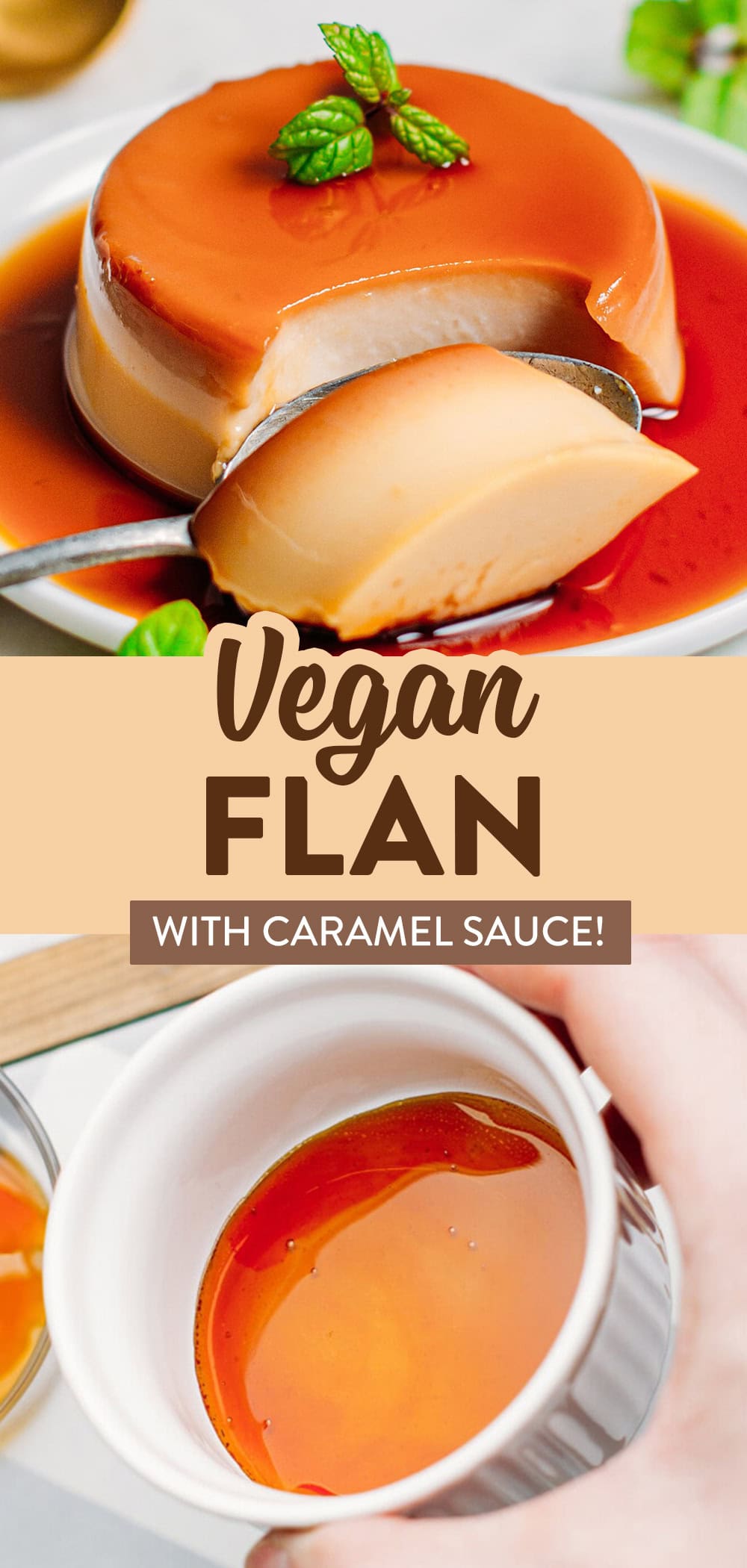
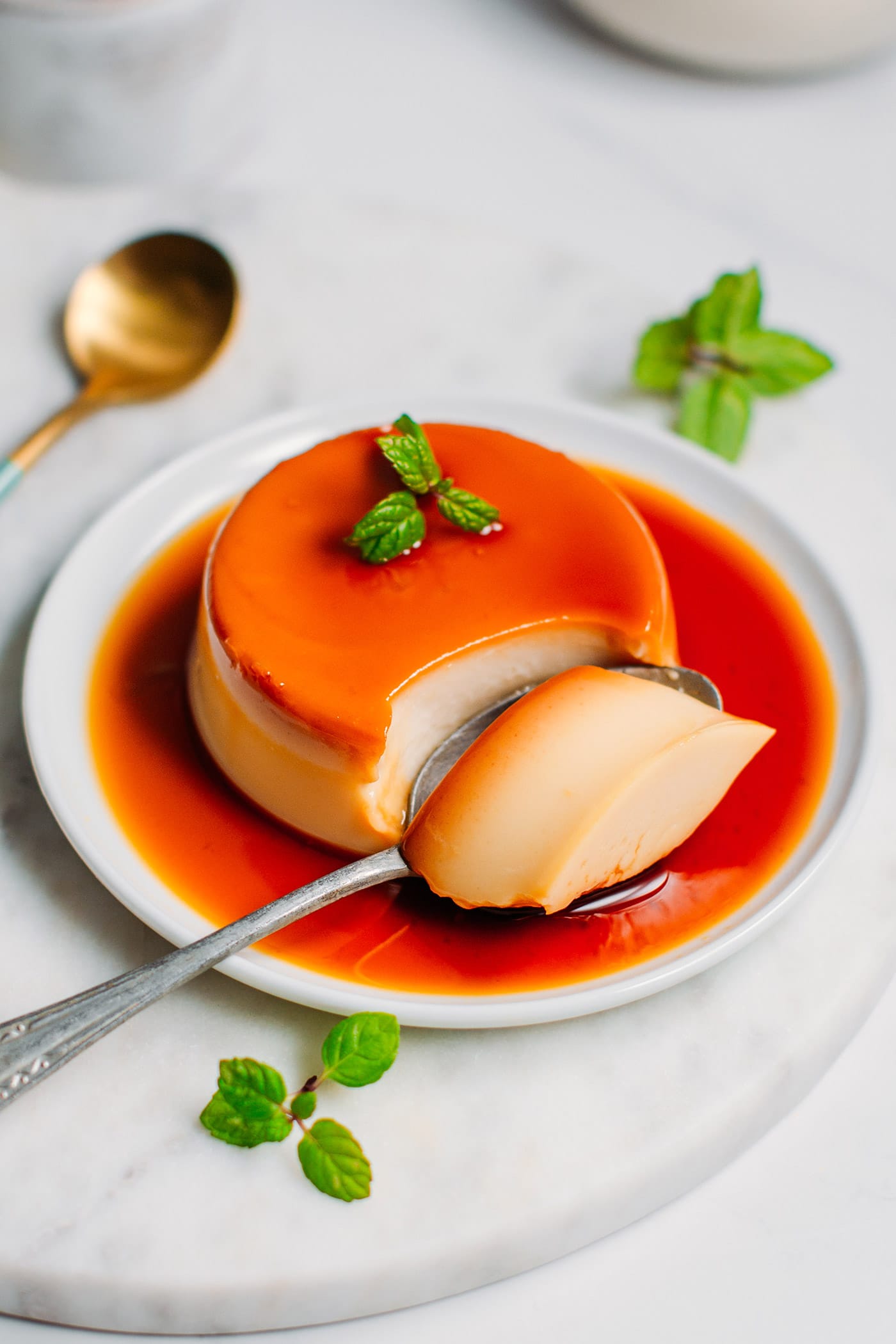
This famous French dessert consists of vanilla custard served with a delicious salted caramel sauce on top. My vegan crème caramel (also known as vegan flan) has a silky-smooth texture, is perfectly sweet, and so light! Plus, it’s dairy-free, gluten-free, and refined sugar-free! SO GOOD!

You are just 6 ingredients and about 30 minutes away from this delicious vegan flan! This is literally the BEST vegan flan I have ever made! And I’m showing you below exactly how to make it step-by-step.
⭐️ Why This Recipe Works
Dreamy melt-in-your-mouth texture.
The silky yet delicate texture of this flan will get you addicted in no time! While it doesn’t have the exact same texture or flavor as the one made with eggs, it’s just as delicious. I combined plant-based ingredients to create a custard that is rich (like it literally melts in your mouth), tender, smooth, and milky.
I even served this flan to non-vegans, and they all loved it! My wife, while biased, can’t get enough of it and requests that I make her a batch at least once a month. But that’s okay because this recipe is not really time-consuming.
Caramel-lovers dream.
This vegan flan packs a ton of caramel flavor! As the flan sits overnight in the refrigerator, the caramel melts and infuses the custard with a sweet and salty flavor. Combined with the fresh vanilla aroma of the custard, it creates a real flavor bomb!
Healthier than your typical flan.
I really went all-in on trying to make this flan as healthy as possible without compromising on flavor. That starts by kicking the refined sugar out of the equation. For the flan part, I decided to sweeten it with maple syrup, giving it a hint of caramel flavor.
Then comes the caramel sauce, which was the most challenging part of this recipe. Generally, caramel is made with granulated white sugar for a simple reason: it caramelizes well, and it’s easy to tell when it’s ready by simply looking at its golden-brown color.
Making caramel without refined sugar is not a simple task though. To do so, I used a combination of maple syrup and coconut sugar. Why a combination of both? Simply because maple syrup prevents the coconut sugar from burning too quickly. See, coconut sugar has a lower melting point compared to white sugar, hence it burns more easily. I discovered through testing that when I tried to caramelize coconut sugar AND maple syrup, the sugar didn’t burn like in my previous tests.
Note: I also included the traditional way to make the caramel in the recipe card. I am showing this method in the process shots below for a simple reason: it’s easier to photograph. The coconut sugar + maple syrup technique requires more attention and cooks faster.
📘 What is Creme Caramel
Creme caramel, also called Flan, is a dessert that first appeared in France during the Middle Ages, around 1400. It consists of a custard creme that is infused with vanilla and topped with a layer of caramel.
It is now popular all around the world, from Latin America (Milk Flan) to the Philippines (Leche Flan), and Viet Nam (Bánh Flan). Each version has slightly different ingredients and processes.
Most recipes call for eggs to firm up the creme, but here, we are using a combination of coconut milk and agar to get a rich and creamy consistency with a firm texture.
🥛 Ingredient Notes
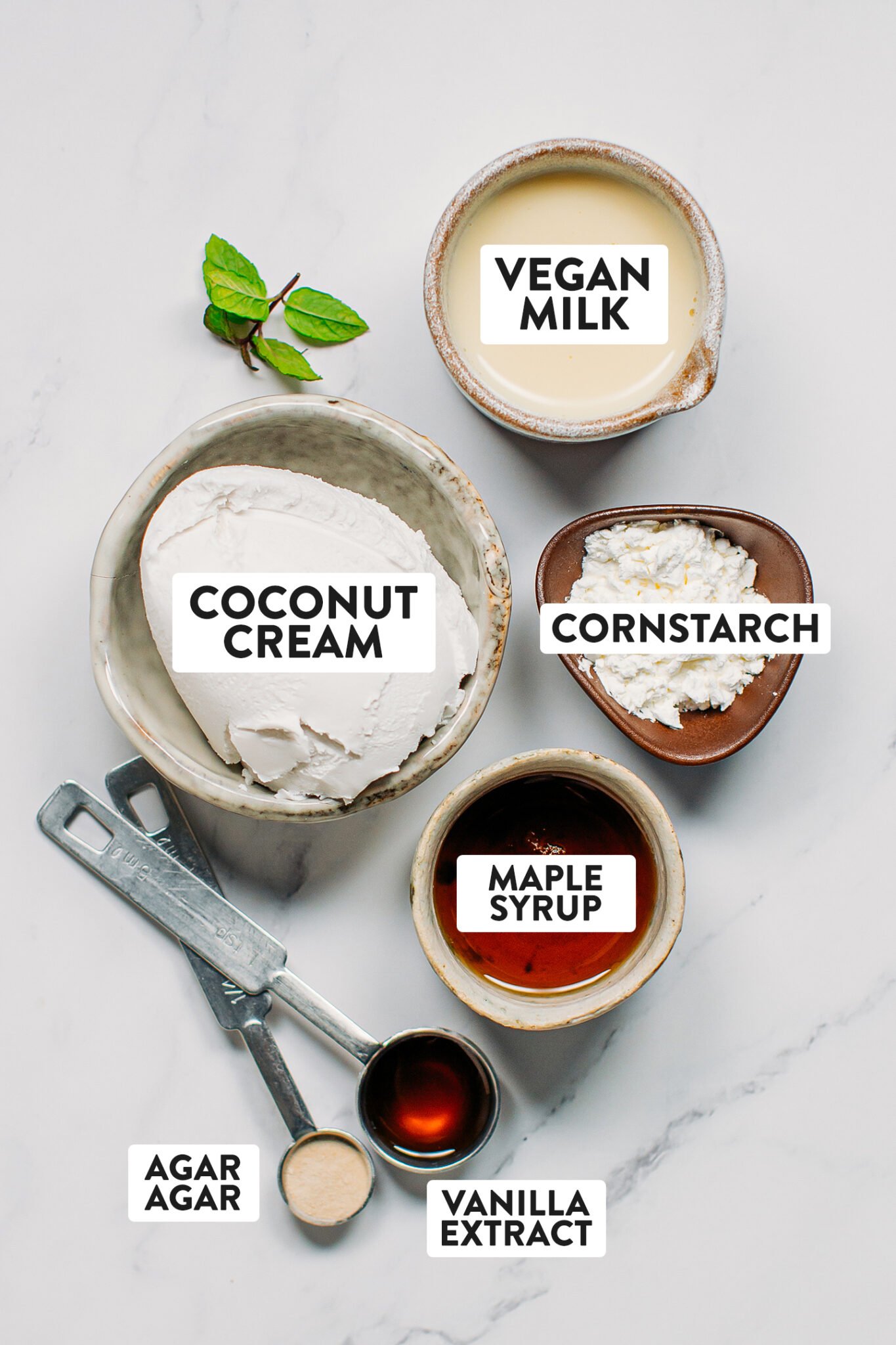
This vegan flan requires pantry staples that are affordable and easy to find. Here is what you will need:
Unsweetened plant-based milk
Plant-based milk makes the base of the custard. You can use any unsweetened milk such as almond, oat, soy, or cashew milk. I personally like to use soy milk – I find it yields a superior mouthfeel due to its richness and creaminess.
If using soy milk: Try to use a brand of soy milk that has a very subtle flavor (I like Silk or Alpro, but I am not a fan of So Good). Some brands have a very strong bean flavor, do not use those. I also recommend not using homemade soy milk for this recipe as the bean flavor would be overpowering.
Coconut cream
After testing with only plant-based milk, I realized that the custard lacked the creaminess that generally comes from eggs. To make up for that, I went with coconut cream, which brings richness and also helps the flan get firmer once it is cold. You want to use the hard part on the top of a refrigerated can of full-fat coconut milk.
Note: I also tested this recipe with coconut milk in place of coconut cream. It works, but the flan is softer and not as creamy.
Maple syrup
I am using maple syrup to sweeten the custard and make the caramel sauce. If you don’t plan to make this recipe refined sugar-free, feel free to use granulated sugar.
Cornstarch and Agar
Most recipes for vegan flan rely on either agar agar or cornstarch. Instead of using one or the other, I used a combination of both to create the most delicate texture! The cornstarch thickens the custard and emulsifies all of the ingredients, while the agar agar helps the custard set and firm up as it cools.
Make sure you are using agar agar powder, not agar flakes.
Vanilla
Vanilla is the essential ingredient that will take your custard from good to amazing. For the best flavor, I recommend using high-quality vanilla extract. You can use store-bought vanilla extract or follow my recipe to make homemade vanilla extract from scratch.
While pricey, fresh vanilla beans impart a fresher and more floral aroma to the custard. If you want to impress your guests with a fancy, expensive bakery-style flavor, use the seeds from half of a fresh vanilla bean in place of the vanilla extract! To do so, slice the vanilla bean in half, scrape the seeds using a thin knife and add them to the milk before cooking the custard.
🥣 How to Make It
This recipe consists of two different preparations. First, we have the caramel that will harden at the bottom of each ramekin. Then, we have the vanilla custard that will go on top of the caramel.
1. The Caramel
Start by preparing the caramel. I am sharing two ways to make it: the traditional way, which uses granulated sugar, and a refined sugar-free version, which uses maple syrup and coconut sugar. Here, I will show you how to make the former.
- Heat the sugar in a pan. Add the sugar and water to a light-bottomed saucepan. Heat over medium heat until the sugar starts to melt and bubble. Do not stir at this stage.


- Allow it to crystallize. After a few minutes, the sugar will start to crystallize and appear to be hardening. That is totally normal. Keep heating the sugar over medium heat.
- Caramelize. After another 1-2 minutes, the caramel will turn golden brown. Heat it for another 10-20 seconds, or until it becomes amber. Be careful not to burn your caramel! Remove the pan from the heat as soon as the sugar has a golden brown color.

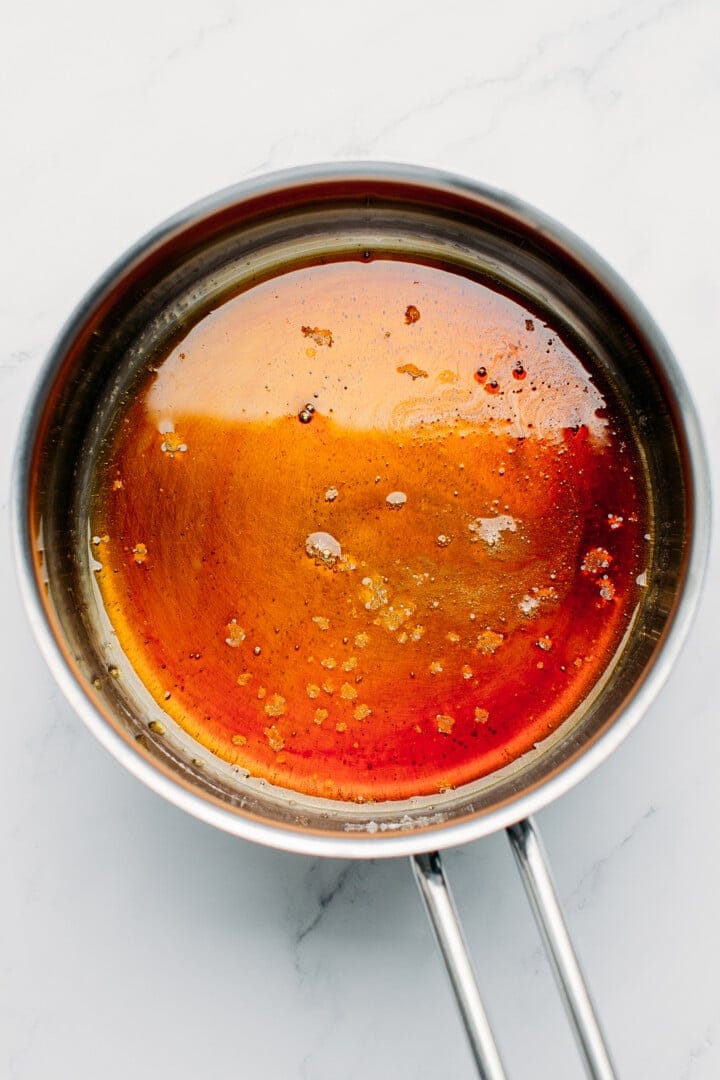
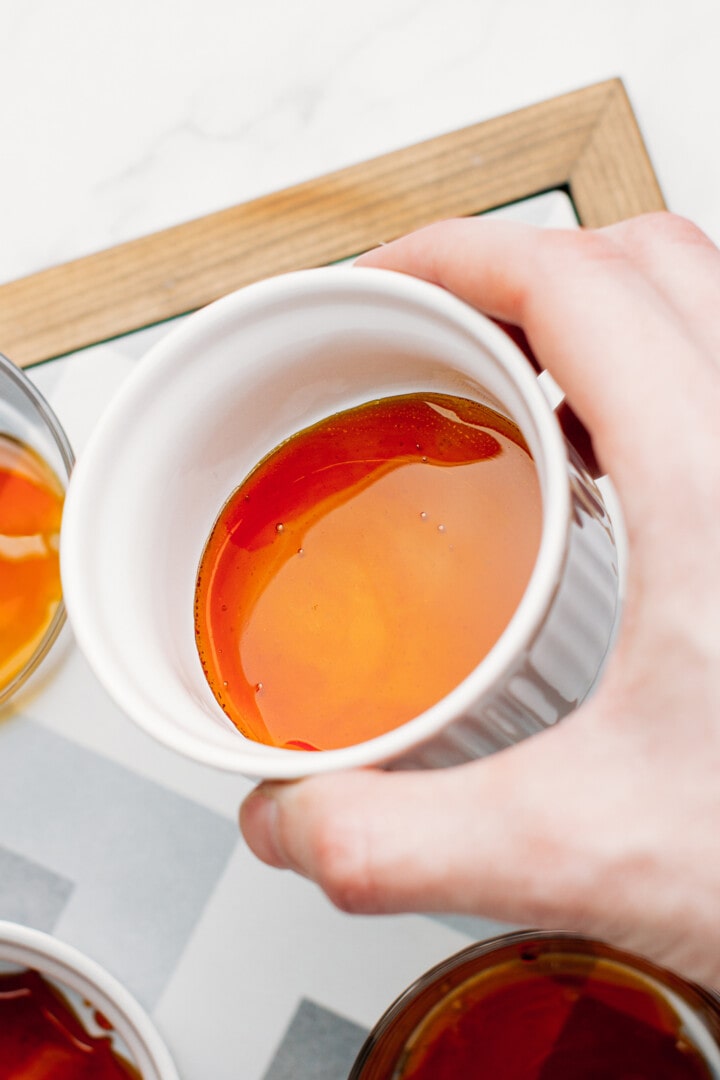
- Divide into ramekins. Next, divide the caramel into 4 small ramekins and tilt to spread the caramel evenly into each ramekin. Let the caramel harden at room temperature.
For The Refined Sugar-Free Version
If you want to make this creme caramel without using any refined sugar, I have got you covered as well! To make the caramel, you will need:
- 2 tablespoons maple syrup
- 2 tablespoons coconut sugar
- ¼ teaspoon white vinegar or lemon juice
- a pinch of salt
Instructions:
- Add the maple syrup, coconut sugar, salt, and white vinegar to a small saucepan. Heat over medium heat, stirring regularly until it starts to boil. Once boiling, let it boil for about 30 seconds, keeping an eye on it to ensure it doesn’t burn.
- Immediately remove from heat and divide the caramel between 4 small ramekins.

2. The Flan (Vanilla Custard)
Once the caramel is done, it’s time to prepare the flan.
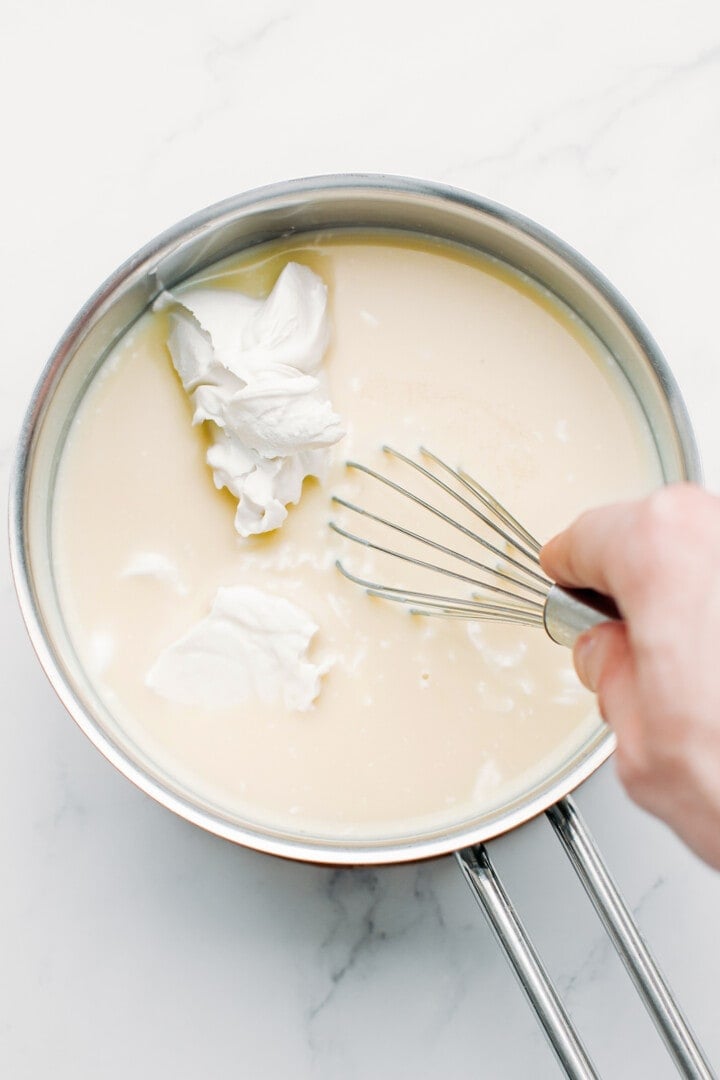
- Whisk together the ingredients. Add the plant-based milk, coconut cream, maple syrup (or sugar), vanilla, cornstarch, and agar to a saucepan. Whisk to dissolve the cornstarch.
- Bring to a boil. Heat over medium heat, constantly whisking until it comes to a boil.
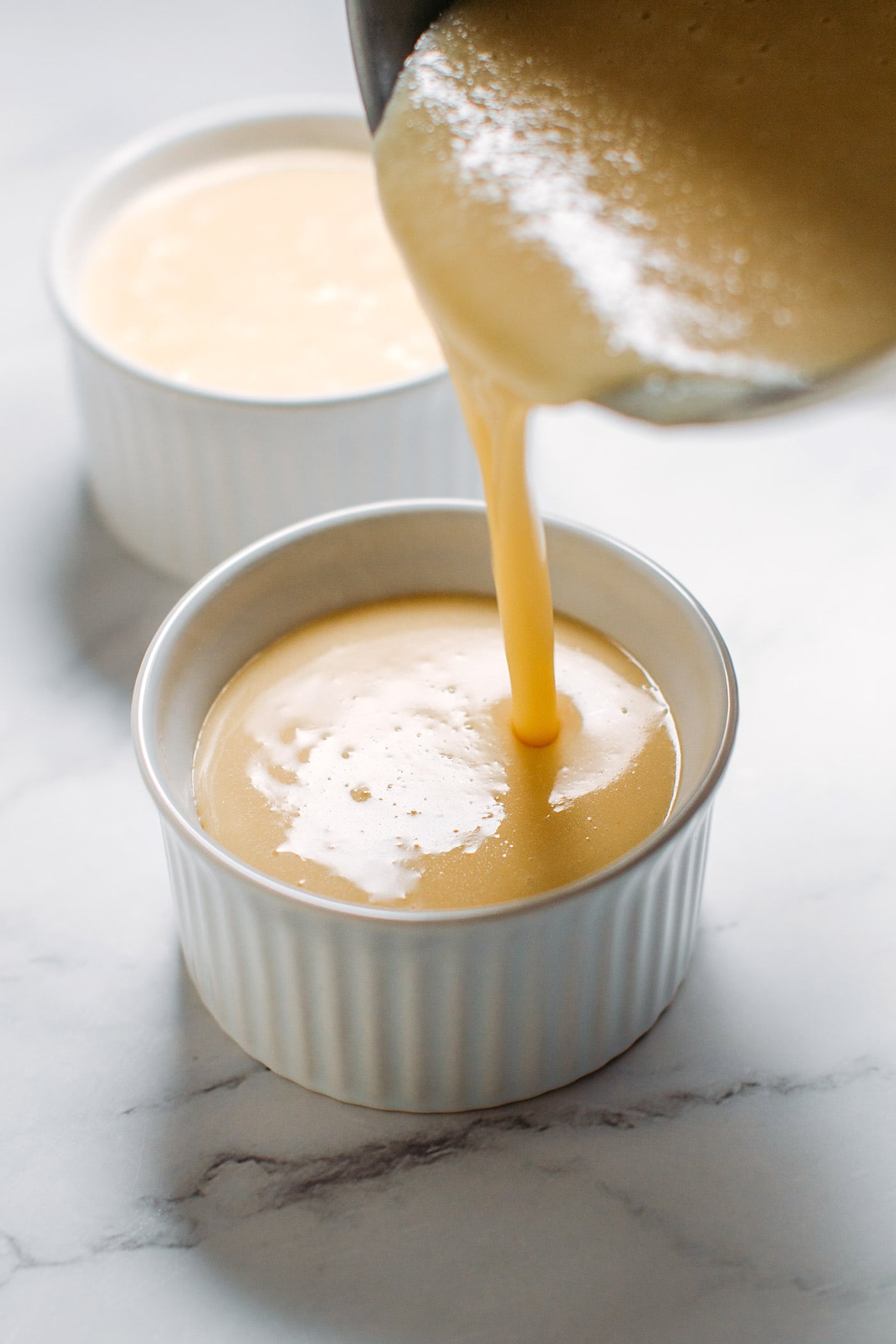
- Thicken. Once the mixture has slightly thickened, transfer to the ramekins, over the caramel.

Here is a quick tip if you want your creme caramel to look good: let the vanilla custard cool down a bit (3-5 minutes) before pouring it into the ramequins. I found out that if you pour it while still very hot, the creme tends to crack a bit on top.
Finally, refrigerate for at least 8 hours before flipping over a plate. The caramel will “melt” over the creme caramel!
To serve, run a knife along the edges of a ramekin. Next, cover the ramekin with a serving plate and quickly flip it upside down. The custard will drop out of the ramekin, and the caramel will flow over the custard!
Salted Coconut Topping
If you want to make this creme caramel fancier, I highly recommend making my salted coconut topping! It consists of shredded coconut and coconut flakes combined with maple syrup and salt and toasted until golden brown and crunchy. You can sprinkle that topping on top of the flan right before serving.
Check out the recipe card below for the full recipe!
📔 Tips
- Sugar vs. coconut sugar for the caramel. If you are hesitating between the different ways to make the caramel, here is some information that may help you decide. The white sugar version, which is the traditional way of making caramel is a bit simpler and yields a slightly superior flavor. The maple syrup and coconut sugar version is a bit more tricky as I find it easier to burn the caramel. It is, however, free of refined sugar, so the choice is yours!
- Allow to cool for at least 8 hours. It is essential to let the flan cool for a minimum of 8 hours. Not only will it allow the caramel to melt, but also the flan to firm up. I noticed the flan tasted even better after 48 hours as the flan could soak up some of the caramel sauce.

❄️ Storing and Reheating
- To store: You can store this creme caramel for up to 4 days in the refrigerator.
- To freeze: I tried freezing it but didn’t get good results as the custard cracked. Hence, I do not recommend freezing it.
💬 FAQ
Basically, yes, it is the same dessert. The denomination changes depending on the country.
There are two ways to enjoy this delicious dessert: Flip on a plate and let the caramel coat the vanilla pudding, or simply dig with a spoon in the ramekin.
Both yield great results! Vanilla bean seeds give the pudding a deeper, fresher flavor. However, they are more expensive than vanilla extract.
I hope you will all love my creme caramel recipe! It is full of vanilla flavor, smooth and creamy, and melts in your mouth! The caramel is the icing on the cake, bringing that extra sweetness that pairs wonderfully with the vanilla custard.
🧁 More Plant-Based Dessert Recipes

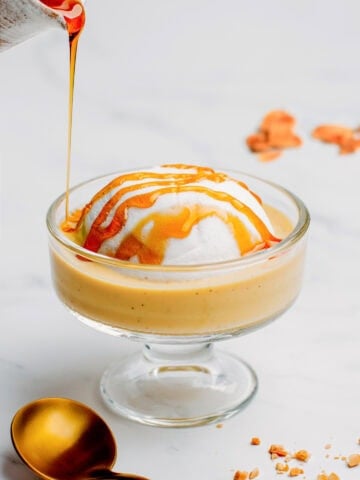


⭐️ Did you like this recipe? Let us know in the comments below, and tag us on Facebook, Instagram, or Pinterest!
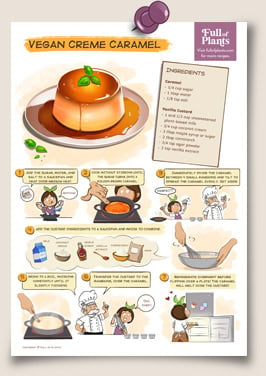
Print the Illustrated Recipe!
Put it in your recipe binder or hang it on your fridge with a magnet!


Save this recipe!
Enter your email below and I’ll send it to your inbox!
Plus, you will receive new recipes every week!

Vegan Creme Caramel (Flan)
Ingredients
Refined Sugar-Free Caramel
- 2 tbsp (30 ml) maple syrup
- 2 tbsp (22g) coconut sugar
- 1/4 tsp white vinegar or lemon juice
- 1/8 tsp salt
Traditional Caramel
- 1/4 cup (50 g) sugar
- 1 tbsp (15 ml) water
- 1/8 tsp salt
Vanilla Custard
- 1 and 1/2 cup (354 ml) unsweetened plant-based milk
- 3/4 cup (177 ml) coconut cream
- 3 tbsp (45 ml) maple syrup or sugar
- 2 tbsp (16 g) cornstarch
- 3/4 tsp agar powder
- 2 tsp (10 ml) vanilla extract
Salted Coconut Crumble (optional)
- 2 tbsp (10 g) shredded coconut
- 2 tbsp (10 g) large coconut flakes
- 1 tsp (5 ml) maple syrup
- 1/8 tsp salt
Instructions
- Before starting, pick one or the other: the refined sugar-free caramel or the traditional one.
Option 1: Refined Sugar-Free Caramel
- Make the caramel. Add the maple syrup, coconut sugar, white vinegar, and salt to a small saucepan. Heat over medium heat, stirring regularly until it starts to boil. Once boiling, let it boil for about 30 seconds, keeping an eye on it to ensure it doesn't burn.
- Divide into ramekins. Next, divide the caramel into 4 small ramekins and tilt to spread the caramel evenly into each ramekin. Set aside and let it cool for at least 20 minutes.
Option 2: Traditional Caramel
- Heat the sugar in a pan. Add the sugar, water, and salt to a light-bottomed saucepan. Heat over medium heat until the sugar starts to melt and bubble. Do not stir at this stage.
- Allow it to crystallize. After a few minutes, the sugar will start to crystallize and appear to be hardening. That is totally normal. Keep heating the sugar over medium heat.
- Caramelize. After another 1-2 minutes, the caramel will turn golden brown. Heat it for another 10-20 seconds, or until it becomes amber. Be careful not to burn your caramel! Remove the pan from the heat as soon as the sugar has a golden brown color.
- Divide into ramekins. Next, divide the caramel into 4 small ramekins and tilt to spread the caramel evenly into each ramekin. Let the caramel harden at room temperature.
Vanilla Custard
- Whisk together the ingredients. Add the plant-based milk, coconut cream, maple syrup (or sugar), cornstarch, agar, and vanilla to a saucepan. Whisk to dissolve the cornstarch.
- Bring to a boil. Heat over medium heat, constantly whisking until it comes to a boil. At this point, the custard will thicken. Once the mixture has slightly thickened, transfer to the ramekins, over the caramel.
- Transfer to the ramekins. Once the mixture has slightly thickened, let it cool for about 5 minutes before pouring it into the ramekins over the caramel. Note: I recommend letting it cool a bit because if you pour it immediately over the caramel, it will melt, and it won't result in good-looking creme caramel.
- Refrigerate. Let the creme caramel cool a bit at room temperature before transferring it to the refrigerator. Refrigerate for at least 8 hours or overnight. The vanilla custard will set, and the caramel will melt.
- To serve, run a knife along the edges of each ramekin, cover with a plate, and flip it. The caramel sauce will be on top and coat the custard. Serve fresh, topped with the salted coconut crumble!
Salted Coconut Crumble (optional)
- Preheat oven to 300°F (150°C) and line a baking sheet with parchment paper.
- In a small bowl, mix the shredded coconut, coconut flakes, maple syrup, and salt.
- Spread the coconut on the prepared baking sheet and bake for about 10 minutes, or until golden brown. Let it cool completely before using.
Video

Notes
- Sugar vs. coconut sugar for the caramel. If you are hesitating between the different ways to make the caramel, here is some information that may help you decide. The white sugar version, which is the traditional way of making caramel is a bit simpler and yields a slightly superior flavor. The maple syrup and coconut sugar version is a bit more tricky as I find it easier to burn the caramel. It is, however, free of refined sugar, so the choice is yours!
- Allow to cool for at least 8 hours. It is essential to let the flan cool for a minimum of 8 hours. Not only will it allow the caramel to melt, but also the flan to firm up. I noticed the flan tasted even better after 48 hours as the flan could soak up some of the caramel sauce.
Nutrition

About the Author
Thomas Pagot is the founder, photographer, and recipe developer behind Full of Plants. He created the blog in 2016 as a personal cookbook for vegan recipes. Through years of recipe development, Thomas has successfully grown Full of Plants into a trusted resource for plant-based recipes.
Leave a Comment