
This post may contain affiliate links. Please read our disclosure policy.
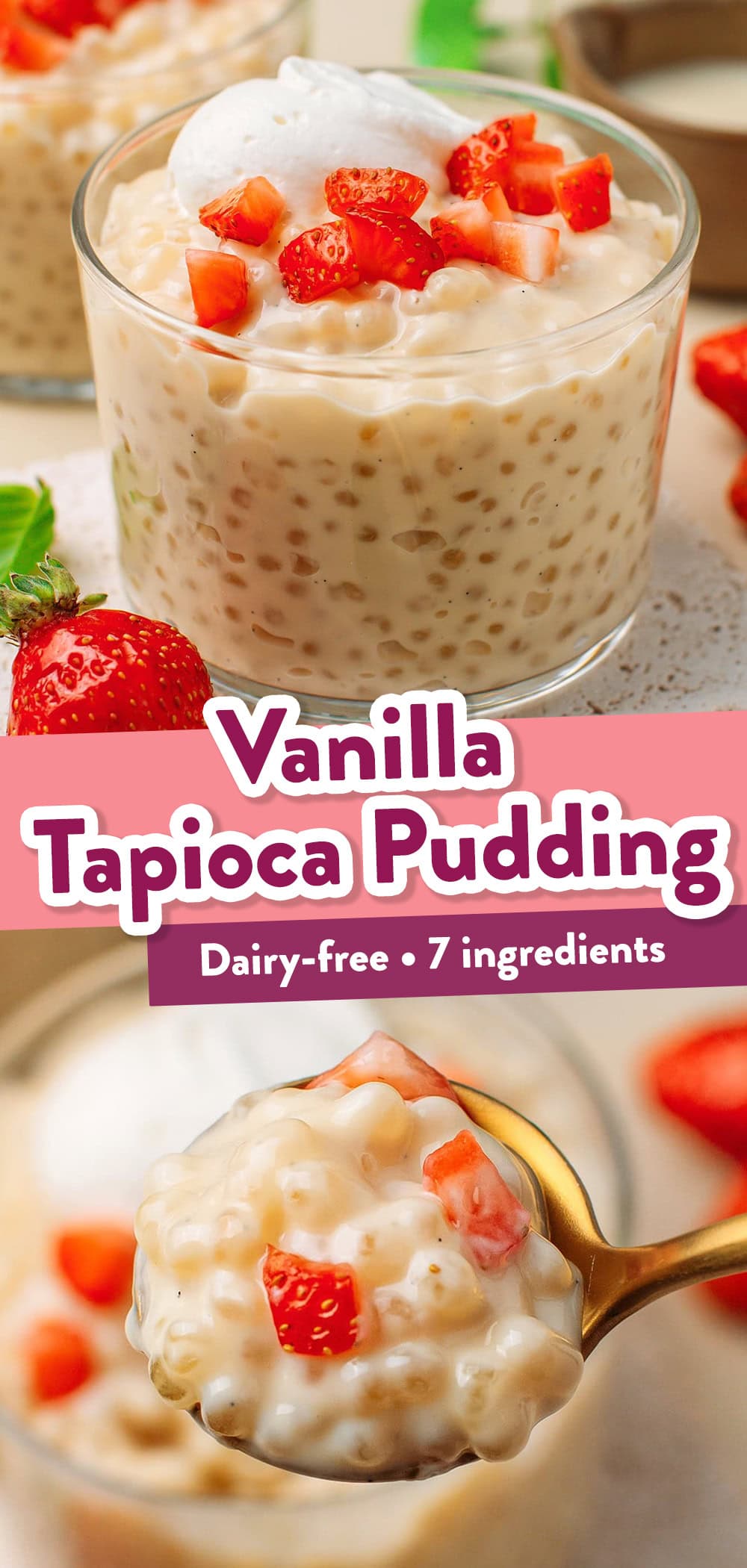
Vanilla tapioca pudding is one of those desserts that’s surprisingly easy to make, uses simple pantry staples, and somehow tastes fancy enough to deserve a spot on a restaurant menu. My version is entirely vegan, made with plant-based milk and cream, with no coconut flavor in sight. It’s ultra creamy, custardy, and loaded with vanilla flavor from real vanilla bean and vanilla extract.
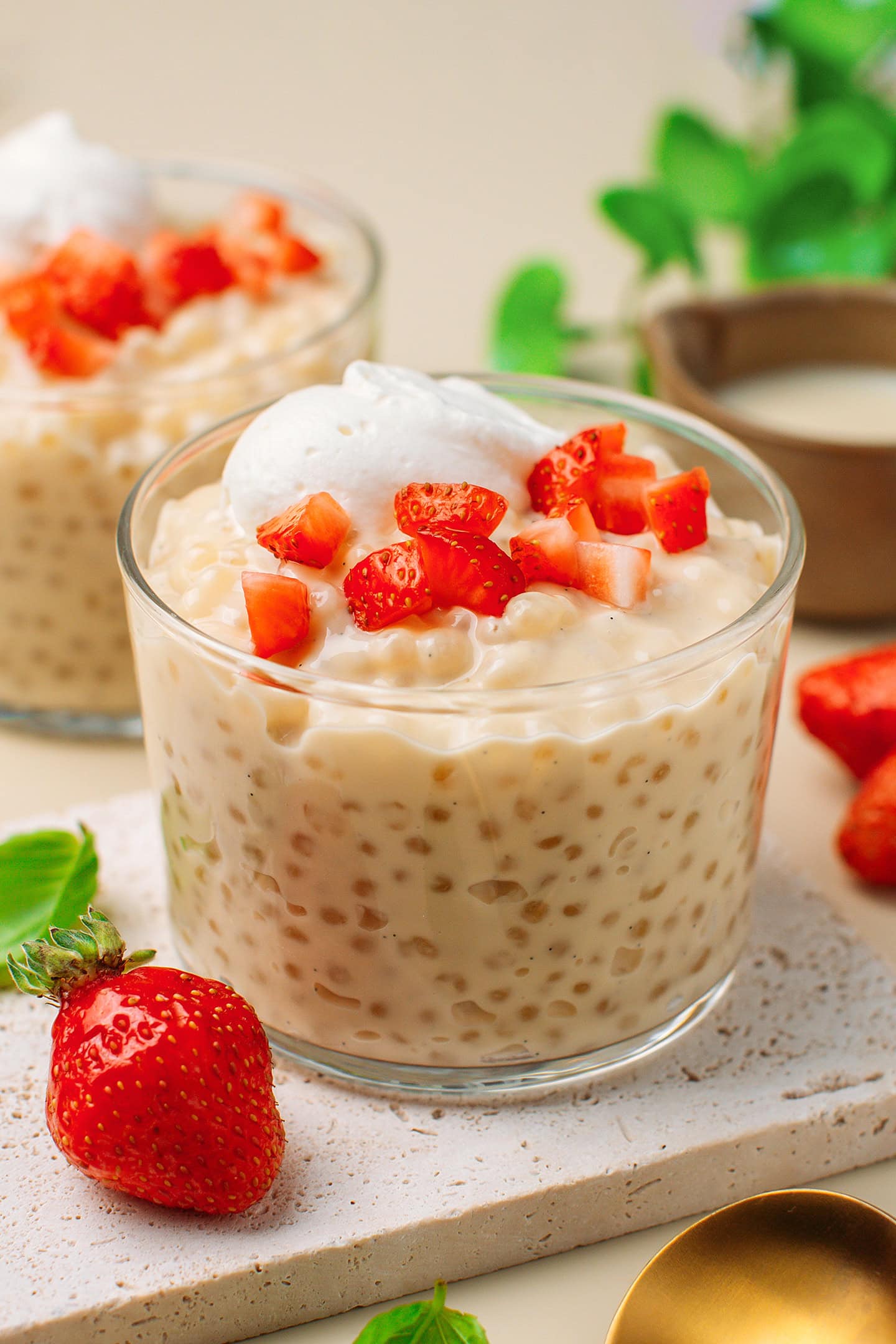
I’ve always loved desserts where vanilla gets to be the star. Pastry cream, vanilla ice cream, Parisian flan… all those desserts where vanilla truly shines. If you grew up eating tapioca pudding like me and thought you’d have to say goodbye to it after going vegan, good news: you don’t!
My version is just as creamy and custardy as the original, flavored with both real vanilla bean and vanilla extract, because honestly, you can never have too much vanilla. And you know what? You can have it ready for tonight if you start now. Just 30 minutes of soaking, 8 minutes of cooking, and a few hours in the fridge are all it takes to get tonight’s dessert sorted!
Our favorite way to serve this? Topped with diced, fresh, juicy peaches!
💕 Why You’ll Love This Vanilla Tapioca Pudding
- Rich and custardy without any dairy. Nor coconut cream! Instead, I rely on a combination of soy milk and plant-based cream to give the pudding its rich texture and creamy mouthfeel.
- Packed with vanilla flavor. The seeds from half a fresh vanilla bean go in there for a deep, floral aroma.
- All done in one pan. No complicated technique here. You’ll need just one pot, a little stirring, and some patience while the pearls cook.
🥛 Ingredient Notes
Here is everything you’ll need to prepare this vanilla pudding. Remember that the exact measurements are available in the recipe card at the bottom of this post.
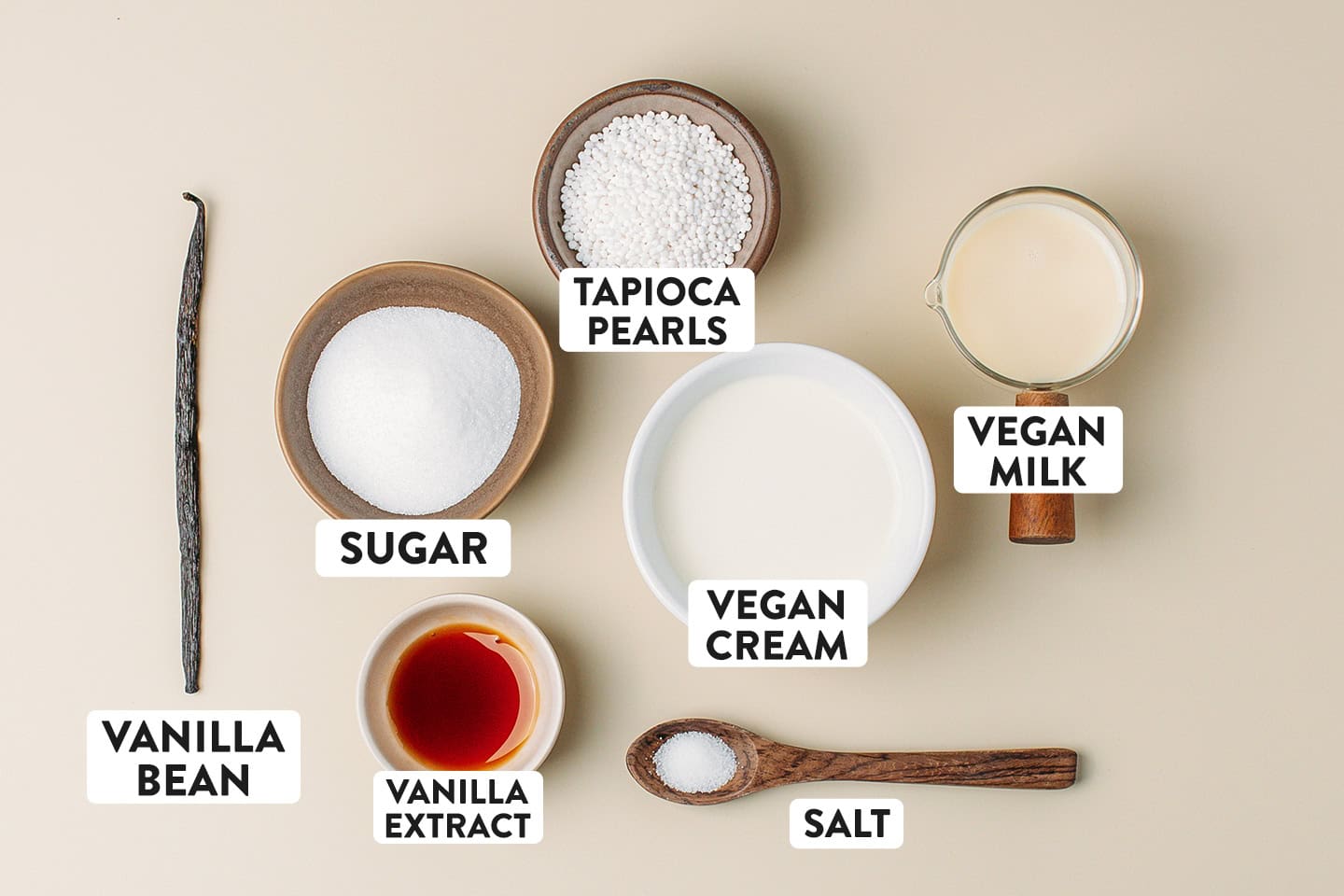
- Tapioca pearls – Use small tapioca pearls, not instant tapioca or tapioca flour. Also, skip large pearls, also known as boba. These are too big and won’t work here.
Where to buy: You can find tapioca pearls online or in most Asian grocery stores. - Plant-based milk – Having tried this pudding with different vegan milks, I highly recommend using soy milk for the creamiest and richest consistency. Other milks work but yield a pudding that’s a tad less creamy.
- Plant-based cream – I like to use Flora’s Plant Cream (15% fat), but feel free to go with your favorite plant-based cream. Coconut cream is an option, but it somehow adds a nutty flavor to the pudding that overpowers the vanilla, so that’s up to you.
- Sugar – Granulated sugar works best in this recipe as it lets the vanilla flavor shine. Other sweeteners, such as coconut sugar or maple syrup, are not recommended here.
- Vanilla bean – Use a moist, plump vanilla bean with a lot of seeds inside. For one batch of this recipe, you’ll need only half a bean. Store the remaining half in an airtight plastic bag or use it to make vanilla sugar.
- Vanilla extract – Use pure vanilla extract, not imitation vanilla.
🥣 Here’s How It’s Done
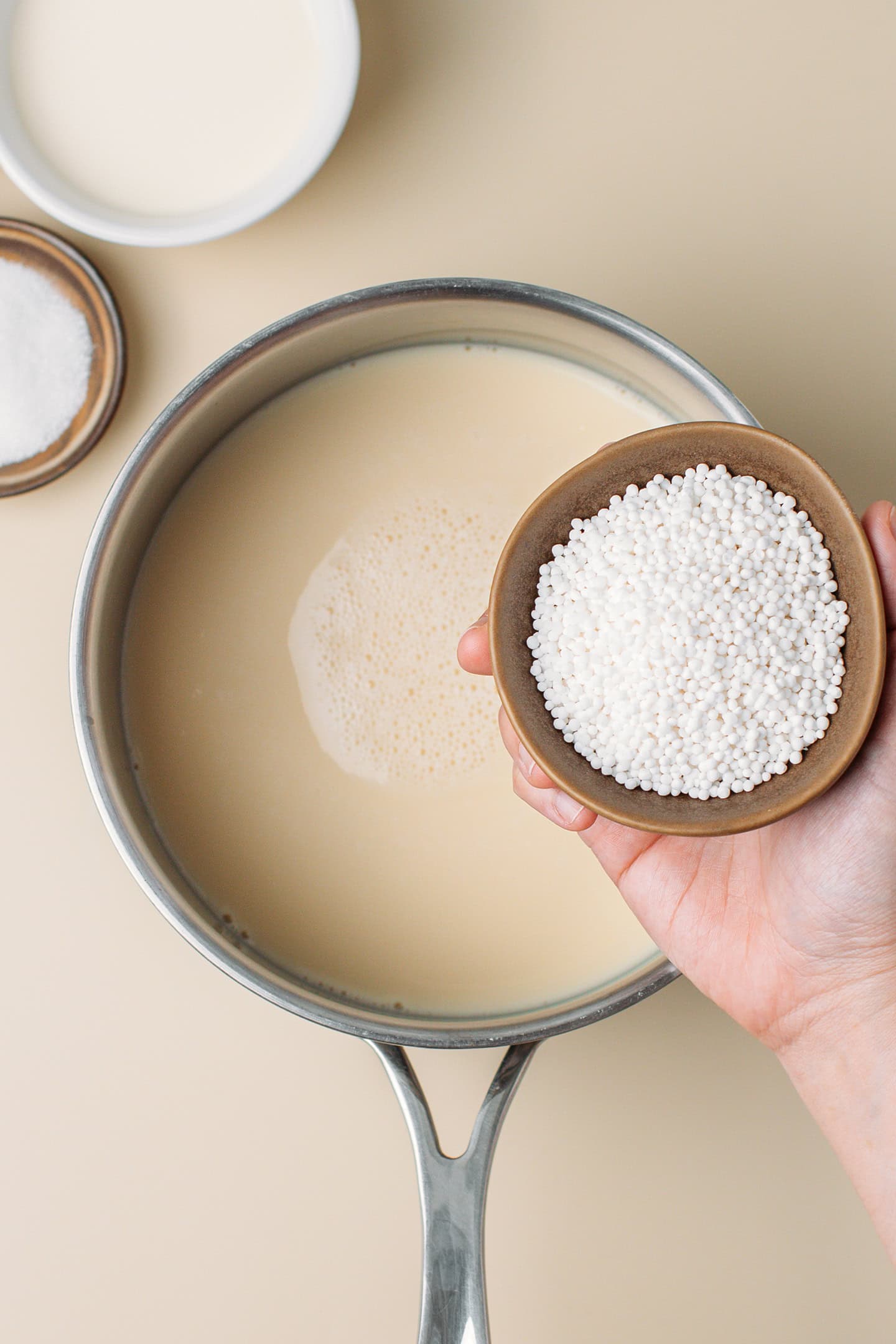
- Soak the pearls. Combine the milk and tapioca pearls in a saucepan. Let the pearls soak for 25-30 minutes.
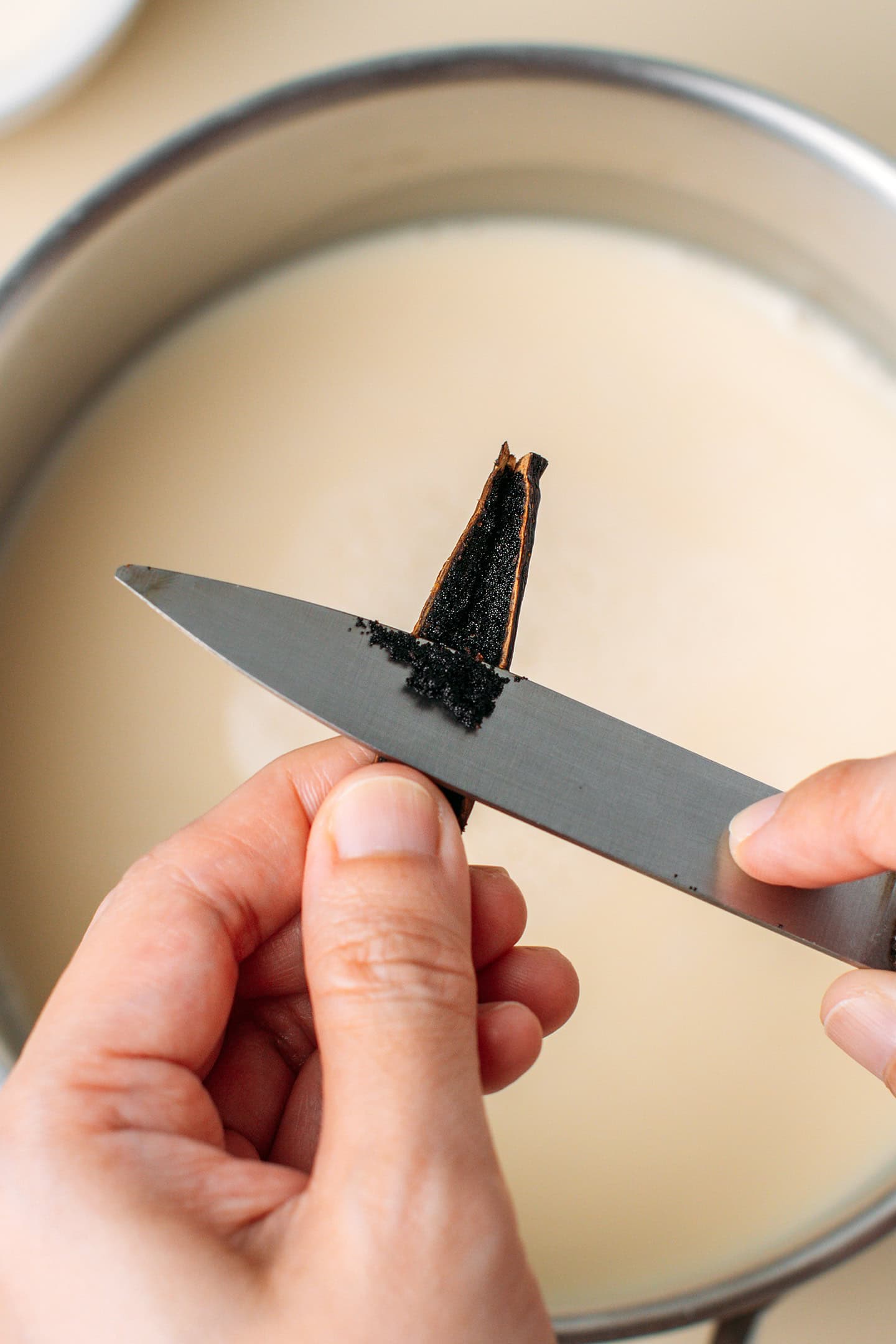
- Add the vanilla bean seeds. Scrape the seeds from the vanilla bean and add them to the saucepan.
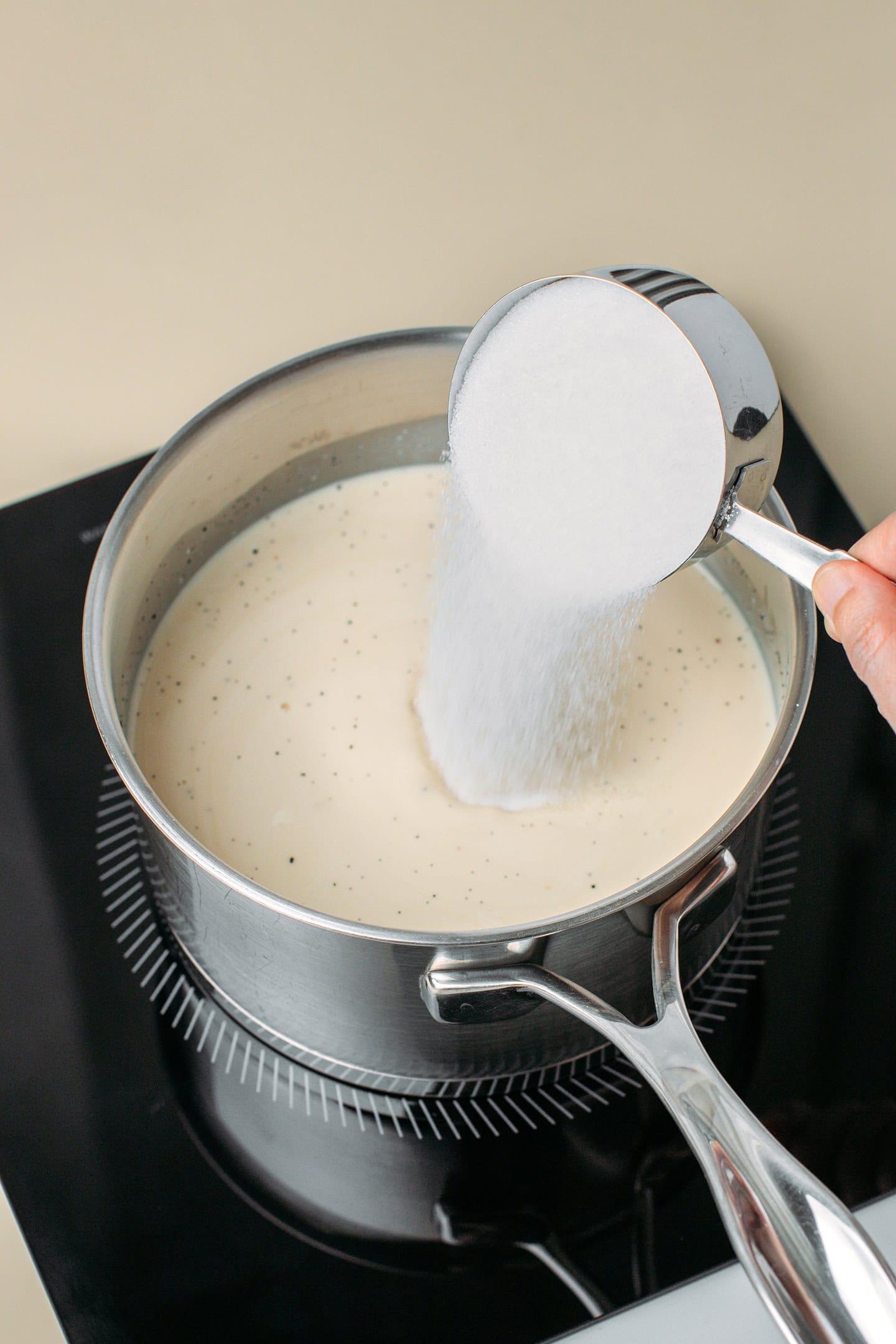
- Add the remaining ingredients. Pour in the plant-based cream. Add the sugar, vanilla extract, and salt.
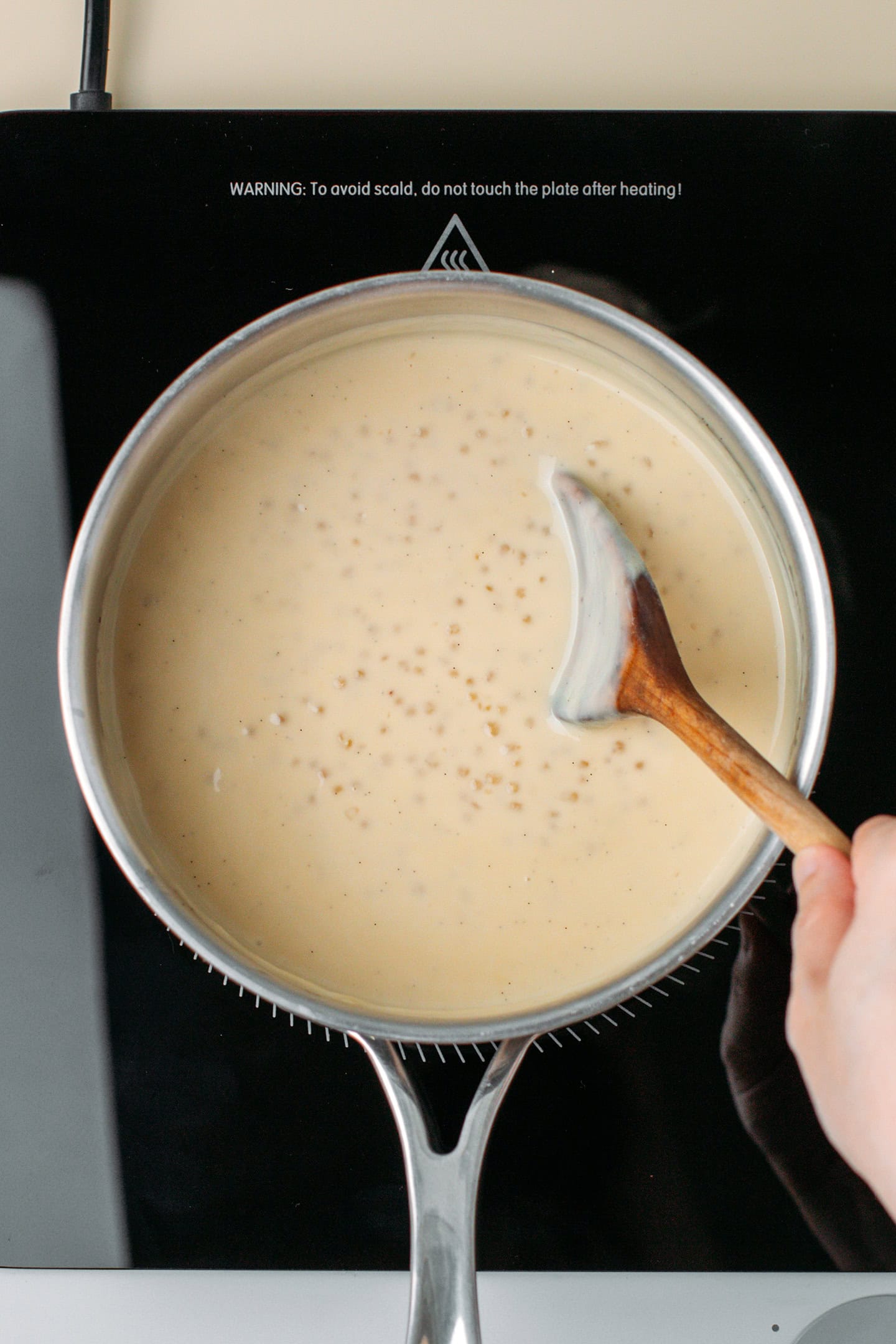
- Let simmer. Bring to a boil, then reduce to a simmer and cook uncovered for 8-10 minutes, stirring constantly.
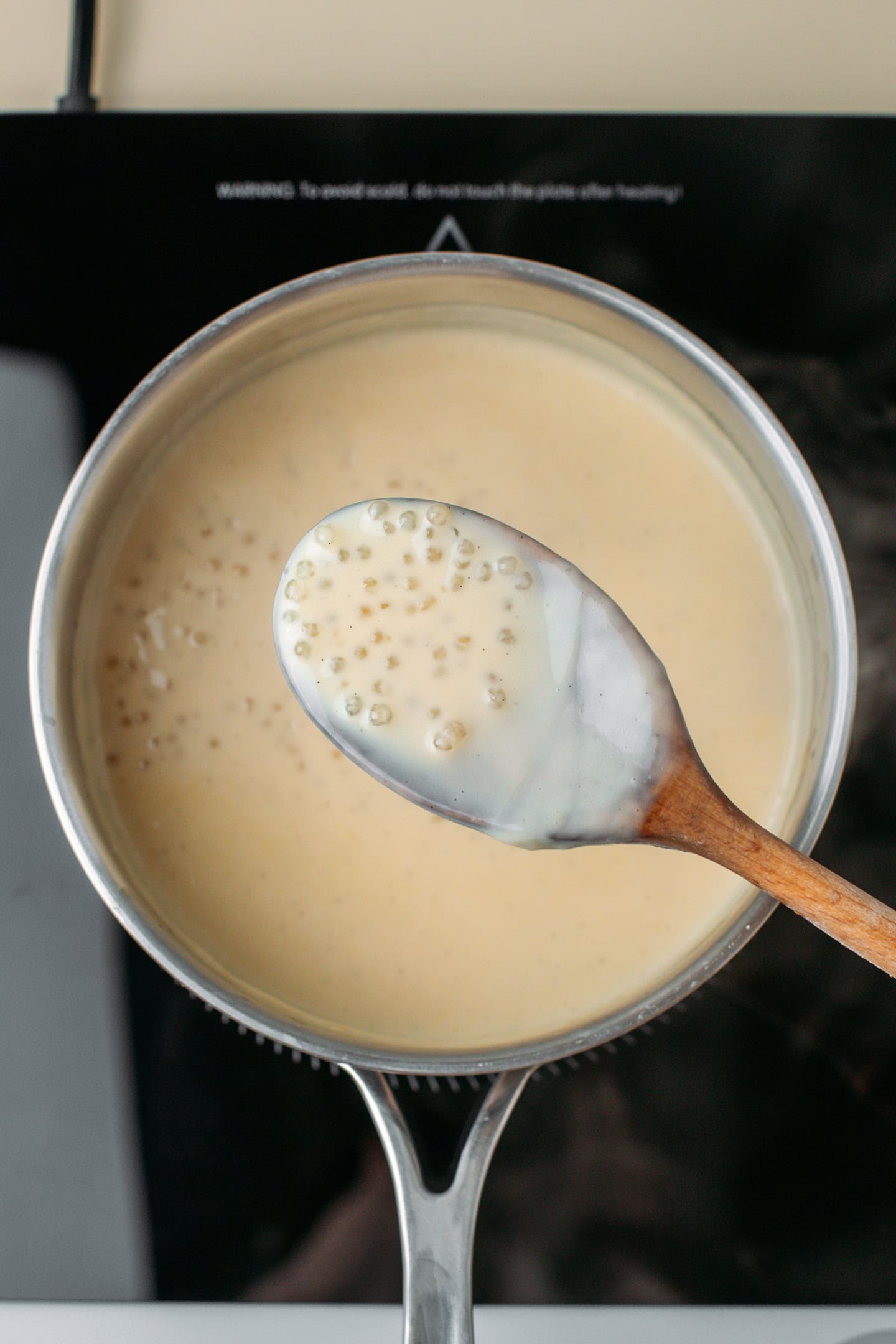
- Cook until tender. Cook until the tapioca pearls are translucent and tender. I recommend giving it a try after 6-7 minutes to ensure you don’t overcook the pearls.
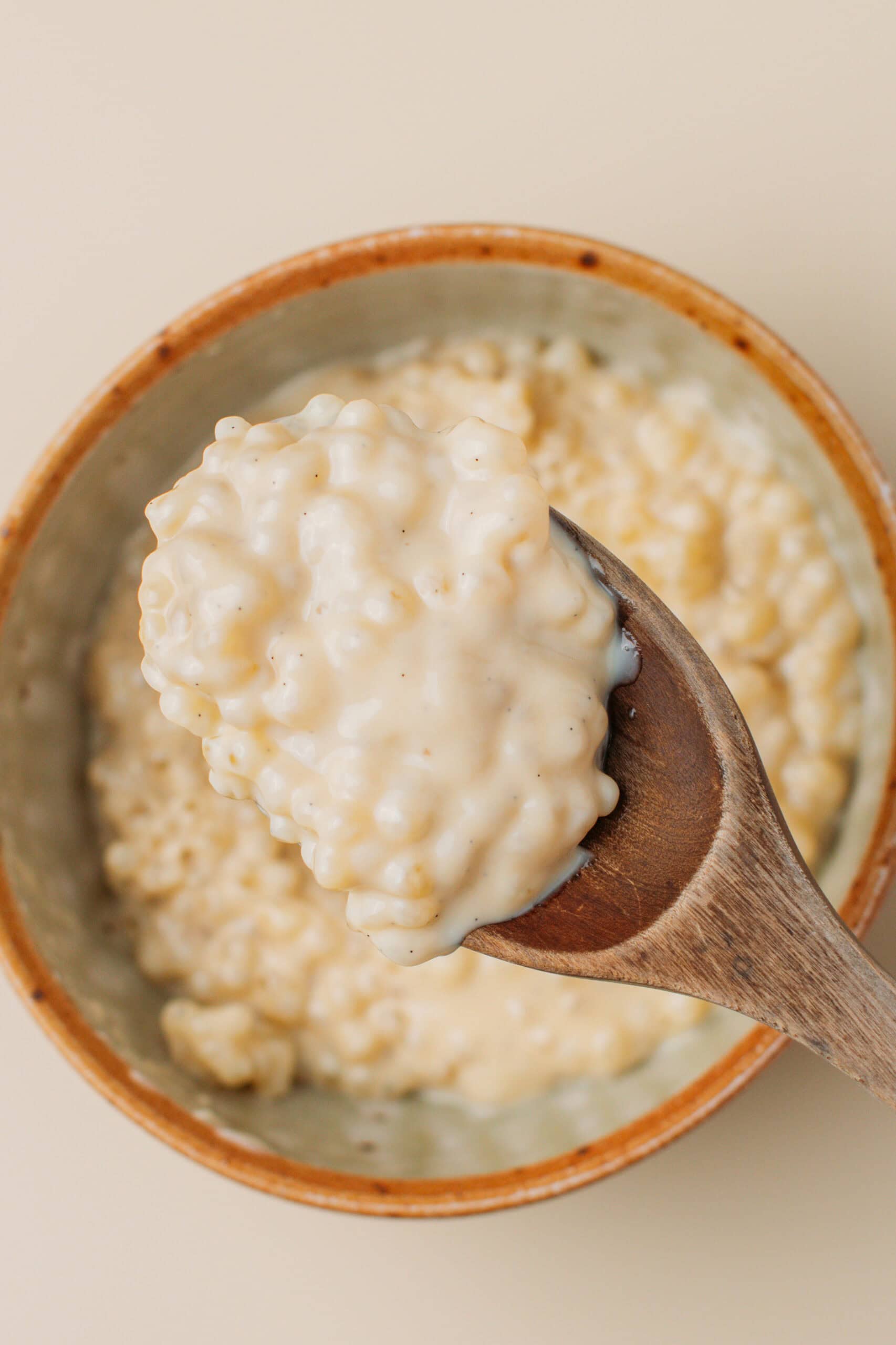
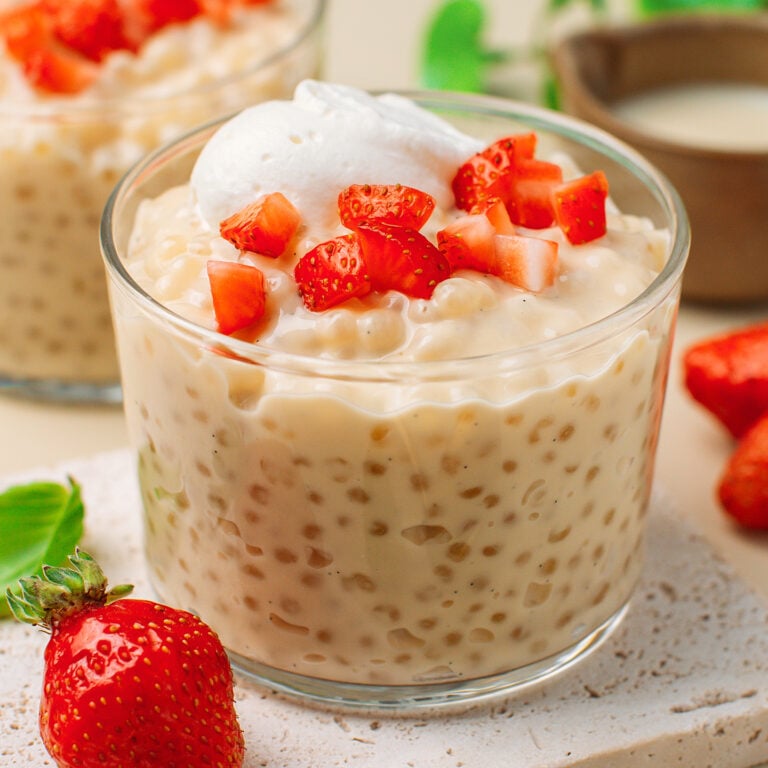
- As you can see, the pudding will thicken a lot as it cools. This is the consistency after just 3 hours in the fridge.
📔 Tips
Here are my tips to ensure your pudding turns out as good as possible:
- Don’t skip soaking the pearls. Unsoaked tapioca pearls take longer to cook and will thicken the cream too much. A quick 30-minute soak makes the cooking process much easier and yields a better texture.
- Don’t overcook the tapioca pearls. Stop cooking as soon as the pearls are soft and translucent. Overcooked pearls become mushy and lose their chewy texture.
- Your pudding will thicken a lot as it cools. At first, it will look very liquid. Don’t panic and don’t add more pearls. The starch from the tapioca continues to thicken the pudding as it chills, and the pearls absorb more of the vanilla cream. Remember, a pudding that looks perfect in the pan will be too thick once chilled. If it does over-thicken, thin it with a splash of plant-based milk before serving.
- Cover with cling film. Once your pudding is done, transfer it to a bowl and press cling film against the surface to prevent a skin from forming on top.
🍑 Serving Ideas
This pudding is delicious as is, but garnishing it with a few toppings makes it even tastier! You can serve it:
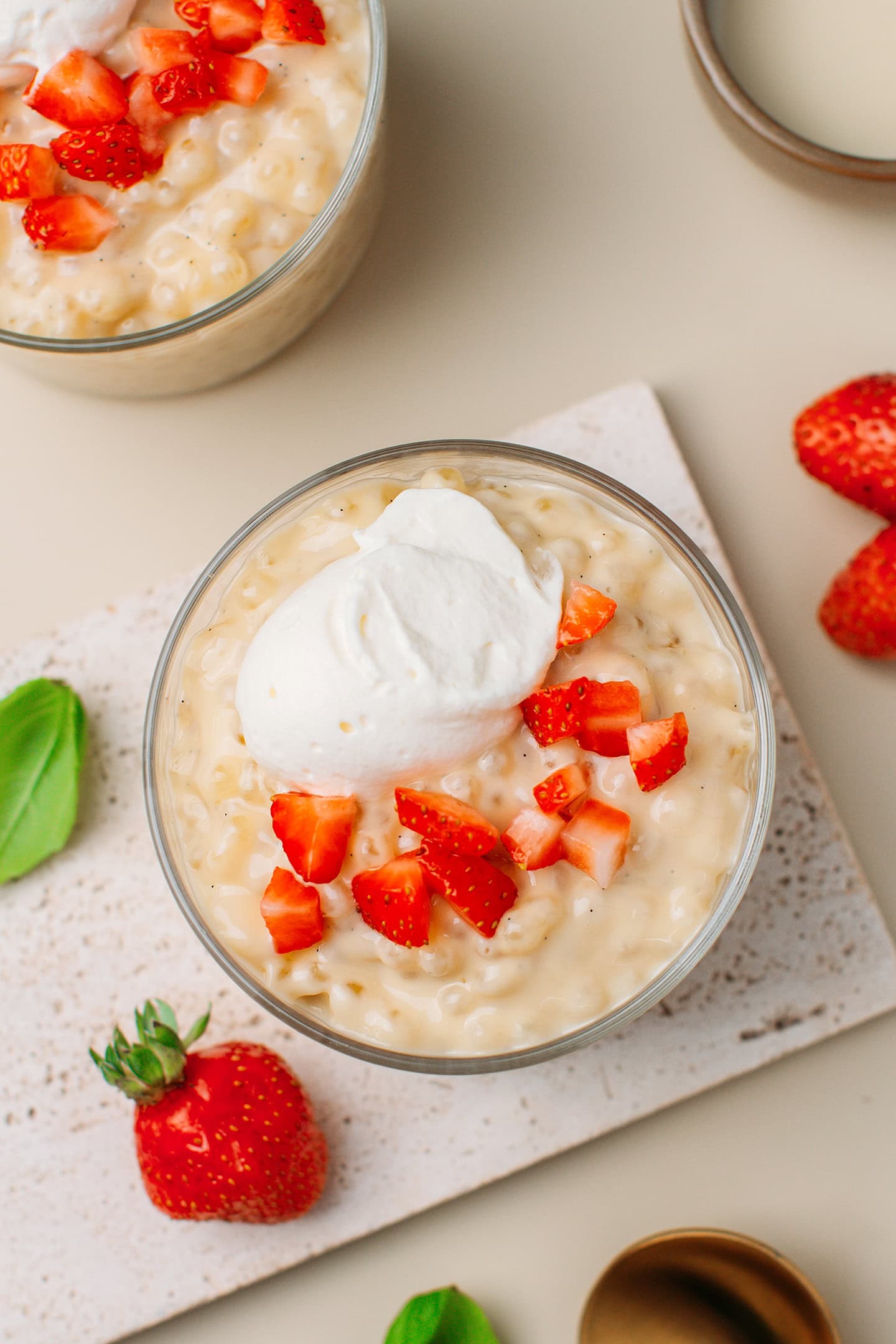
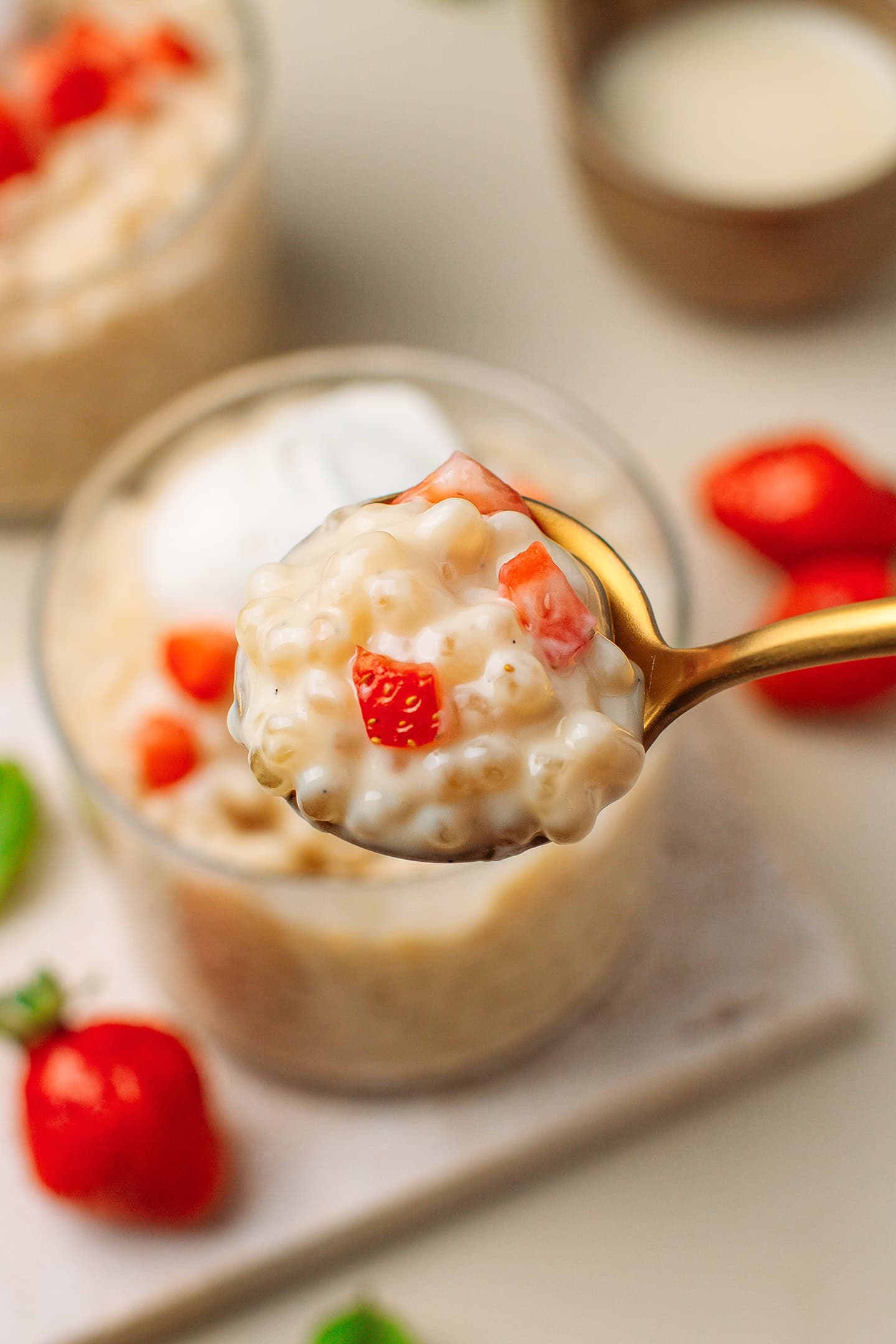
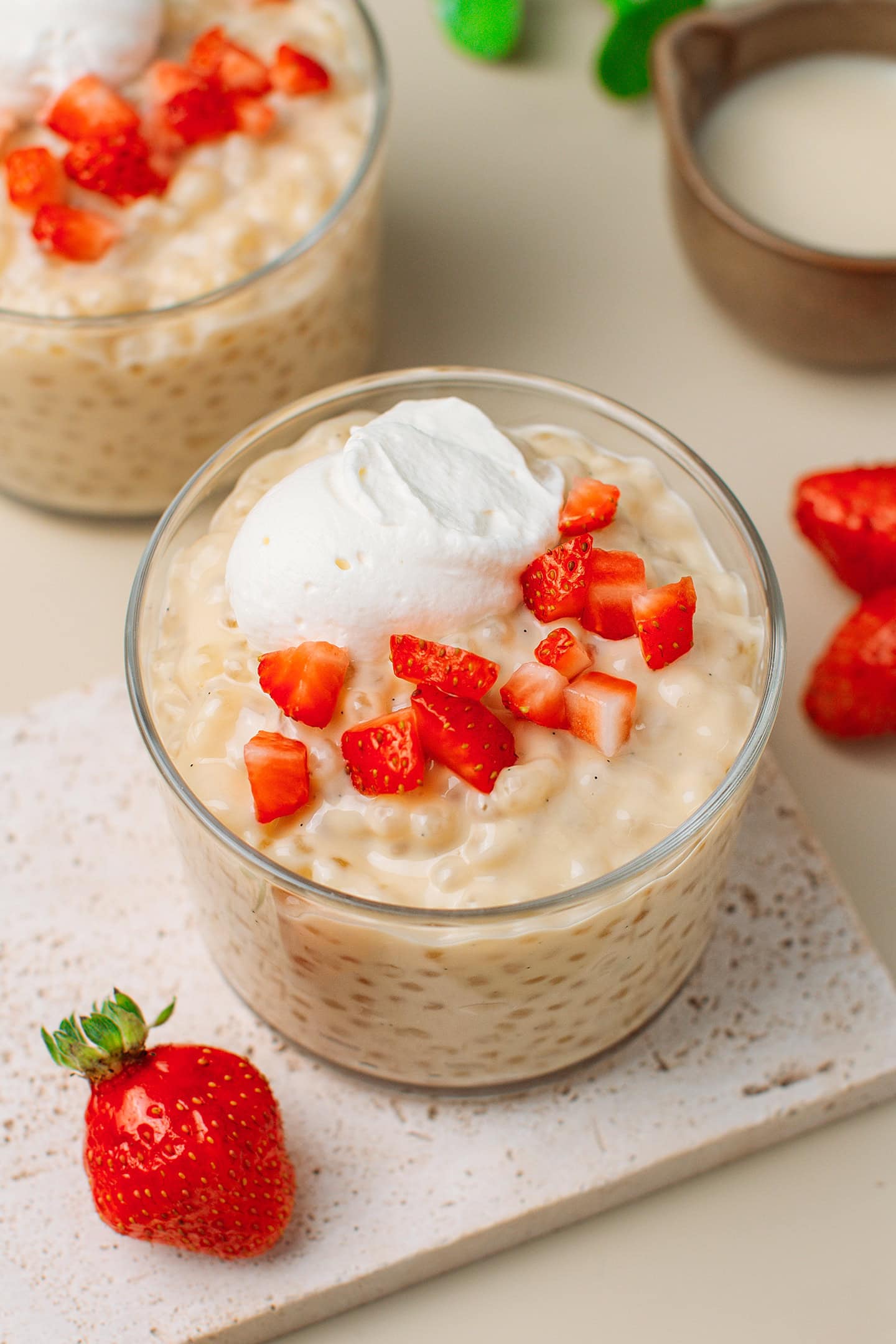
With fresh fruits. During summer, our favorite topping is fresh fruits. We love diced strawberries and diced peaches – those taste so good combined with the vanilla cream! Other great options are blueberries, diced mango, sliced banana, or halved cherries.
Topped with chocolate. Not into fruits? Chocolate chips, shaved chocolate, or chocolate syrup make a great topping.
With whipped cream. Pipe some vegan whipped cream on top for decoration if you’re serving this pudding to guests.
Layered in glasses. Layer chilled pudding with jam or fruit compote in individual glasses or ramekins for a fancier dessert.
With a salted caramel drizzle. This one’s for those of you who have a sweet tooth! Drizzle vegan caramel sauce over the pudding right before serving. Caramel + Vanilla = 😍
❄️ How to Store
- Fridge: Cover the pudding with plastic wrap and store it in the fridge for up to 5 days.
- Freezer: I don’t recommend freezing this tapioca pudding. The pearls become hard and lose their chewy texture after thawing.
💬 FAQs & Troubleshooting
Yes, you can use only 1/3 cup of sugar for a less sweet pudding.
You can serve it both ways! We personally prefer it served chilled as it tastes less sweet and the vanilla is more pronounced.
Yes, you can. In that case, replace the white sugar with vanilla sugar or increase the vanilla extract to a total of 3 teaspoons.
They were either not soaked long enough or needed more time to cook. Cook them a bit longer until they are completely translucent.



Save this recipe!
Enter your email below and I’ll send it to your inbox!
Plus, you will receive new recipes every week!
Creamy Vegan Tapioca Pudding (Coconut-Free)
Ingredients
- 2 cups (480 ml) unsweetened plant-based milk (Preferably soy milk)
- 1/3 cup (60 g) tapioca pearls
- 1/2 fresh vanilla bean
- 1 cup (240 ml) plant-based cream (Such as Flora or soy cream. Coconut cream works too)
- 1/2 cup (100 g) sugar
- 2 tsp (10 ml) vanilla extract
- 1/8 tsp salt
Instructions
- Soak the pearls. To a medium-sized saucepan, add the plant-based milk and tapioca pearls. Split the vanilla bean in half lengthwise and scrape out the seeds using a knife. Add the seeds to the saucepan and give it a quick stir. Let the pearls soak for 25-30 minutes.
- Add the remaining ingredients. Pour in the plant-based cream. Add the sugar, vanilla extract, and salt.
- Cook the pudding. Bring to a boil over medium heat, then reduce to a simmer and cook uncovered for 8-10 minutes, stirring constantly. Cook until the tapioca pearls are translucent and tender. I recommend giving them a try after 6-7 minutes to ensure you don’t overcook the pearls. Important: The pudding will look very liquid, this is completely normal. Don't cook it longer. It will dramatically thicken as it cools.Once the pearls are tender, turn off the heat and transfer the pudding to a glass bowl. Immediately press cling film against the surface to prevent a skin from forming on top. Allow the pudding to cool at room temperature for about one hour before transferring it to the fridge.
- Chill. Chill the tapioca pudding in the fridge for at least 4 hours or until it is completely chilled. Serve it topped with fresh fruits, shaved chocolate, or a drizzle of caramel sauce!
- You can store this pudding for up to 5 days in the fridge.
Notes
Nutrition

About the Author
Thomas Pagot is the founder, photographer, and recipe developer behind Full of Plants. He created the blog in 2016 as a personal cookbook for vegan recipes. Through years of recipe development, Thomas has successfully grown Full of Plants into a trusted resource for plant-based recipes.
Leave a Comment